
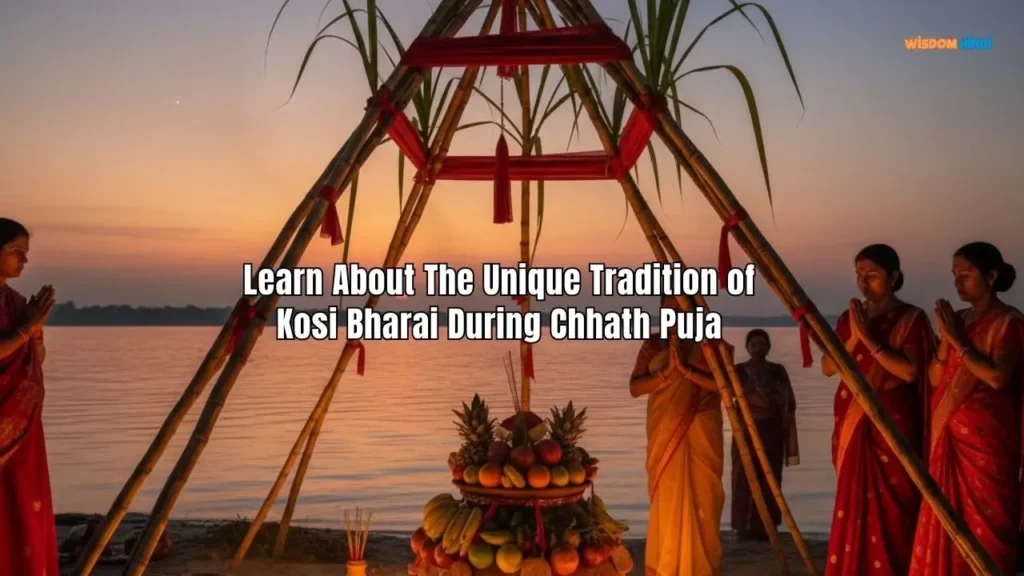
Chhath Puja Kosi Bharai Method: Every festival celebrated in India is marked by special significance. Indian traditions are not limited to rituals but are also deeply rooted in emotions. They ignite the flame of devotion and faith. One such festival is the Chhath Mahaparva. Various rituals are performed during the Chhath Mahaparva, and a special resolution is made during this time, called Kosi Filling.
Kosi Filling is not just a part of Chhath Puja; it is an expression of the fulfillment of a wish. It is a gesture of gratitude towards God. When a person’s wish is fulfilled during Chhath Puja, they fill the Kosi to express their gratitude to Chhath Maiya. This wish can be for any type of child, family happiness and prosperity, or freedom from a major obstacle. It is believed that wishes made to Chhath Maiya are fulfilled within a year, and afterward, the goddess is required to cross the Kosi River. This tradition has been going on for centuries, and even today, people in the new generation follow it with the same devotion.
Read More: Chhath Sadhana in the Mahabharata Era: Kunti and Draupadi observed the Sun Fast and Sun Mantra
What is Kosi?
Kosi is a special ritual of Chhath Puja in which the devotee expresses gratitude after the completion of the fast. During this ritual, the fasting person whose wish has been fulfilled must place a special Kalash (urn) and a lamp (Deep Malik) under a sugarcane canopy. This Kalash is called Kosi. Seasonal fruits, vegetables, Thekua (thekua), Batasha (sweet rice balls), and crispy rice balls, etc., are placed in it. Lamps are lit around it. This is an expression of gratitude towards Chhath Maiya, performed to thank her.
The light of the lamps lit around the Kosi is considered a symbol of happiness, prosperity, and wealth, and the items filled in the Kosi symbolize Chhath Maiya’s blessings. The celebration of the fulfillment of a wish is called Kosi Bharana (filling the Kosi). This symbolizes how Chhathi Maiya does not disappoint those who ask for anything during Chhath.
How is Kosi Filled on the Chhath festival?
The Kosi is filled on the evening of the Chhath Tithi. The person filling the Kosi must go to a ghat. If a ghat is not available nearby, the Kosi can be filled in the courtyard of the house. The environment for filling the Kosi must be kept extremely pure and sacred. The person filling the Kosi with devotion in their heart and a wish fulfilled must do so. If possible, hum Chhath songs during this time, which purifies all emotions in the mind. Light as many lamps as possible to express gratitude to Chhath Maiya.
The Process of the Kosi Bharai
Anyone, whether male or female, can fill the Kosi. Anyone whose wish was fulfilled must fill the Kosi. It is said that the Kosi should be filled in the same year in which the wish was fulfilled. If you made a single wish, fill one Kosi; if you made two wishes and both wishes were fulfilled, fill two Kosi. A sugarcane pavilion is prepared to fill the Kosi. Seven or fourteen sugarcanes are required and a red cloth is mandatory. Prepare a pavilion with 7 or 14 sugarcanes. Tie it with a red cloth.
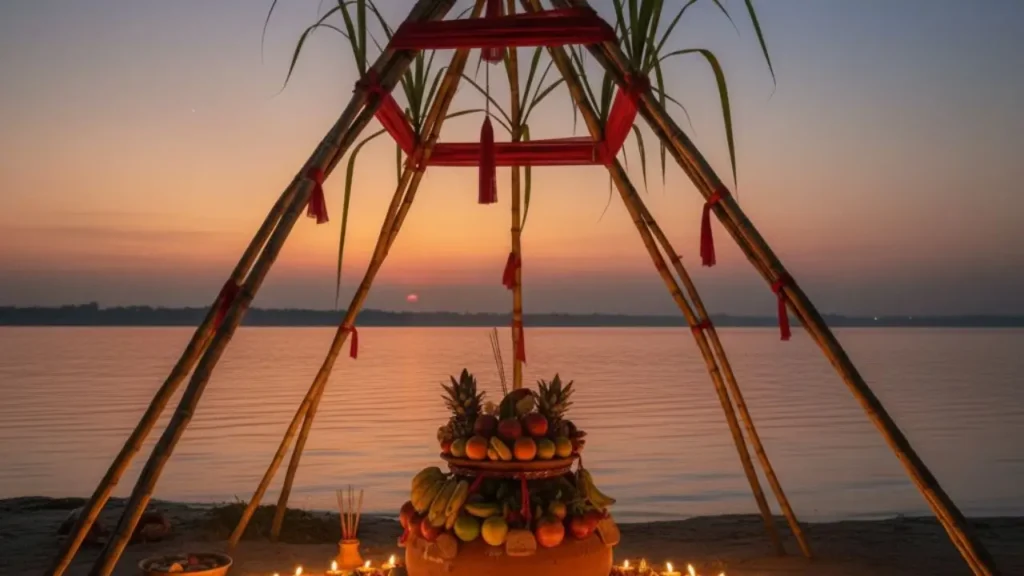
Below it, decorate a square with rice flour and turmeric. Plaster the ground with cow dung and decorate it with flowers. After this, place a Kosi, i.e. a Kalash, and light lamps around it. Fill the Kosi with puffed rice, sugar candy, seasonal fruits, water chestnuts, sweet potatoes, Thekua, and crispy rice laddus. Place a lid on it. Now light a four-faced lamp on it. The four-faced lamp symbolizes illuminating all four directions. After this, place 12 or 24 Sarai, i.e. earthen pots. Place one fruit, one vegetable, and one lamp in each Sarai. If two wishes have been fulfilled, then make 2 Kosi and decorate 24 Sarai.
Worship Method After Decorating the Kosi
After decorating the Kosi, the sarai is placed. After placing 12 or 24 sarais, depending on your faith, take a pot. Fill it with water and place mango leaves in it. Now, apply turmeric and rice flour to the sugarcane, kalash, and mandap. After this, invoke Lord Ganesha and worship him. Offer Akshat, Roli, Mauli, and sandalwood on all the lamps and perform the puja. After this, sing traditional Chhath Maiya songs. If possible, remain immersed in devotion throughout the night and thank Chhath Maiya.
Kosi Immersion and Prasad
After performing the Kosi puja on Chhath, the Kosi immersion process is completed after offering Arghya to the rising sun on Saptami. Distribute all the fruits, vegetables, and sugarcane as Prasad and immerse the kalash in a flowing water source. If there is no flowing water source nearby, create an artificial tub at home and immerse the kalash in it, distributing the Prasad to all loved ones. Accepting this offering brings happiness, good fortune, and health to life.

Overall, the tradition of the Kosi Bharai is not only a celebration of faith and gratitude, but also teaches that every person’s every wish is fulfilled, and that after the wish is fulfilled, one must thank God so that others too receive inspiration and encouragement. Kosi is not just a mere earthen lamp or pot; it symbolizes the inner light of human life, which tells how to keep it burning.
Related Article:
- How to Observe Chhath Vrat and Worship During Menstruation
- Perform Chhath Puja Rituals Even While Living Abroad
- First Human Commitment to Sun Worship was Made by Mother Sita in the Form of the Chhath Vrat
FAQ- Chhath Puja Kosi Bharai Method
What is the Chhath Puja Kosi Bharai Method?
To fill the Kosi, prepare a canopy of 7 or 14 sugarcanes. Tie it with a red cloth. Below it, decorate a square with rice flour and turmeric. Smear the ground with cow dung and decorate it with flowers. Next, place the Kosi, or a pot, and light lamps around it. Fill the Kosi with puffed rice, sugar candy, seasonal fruits, water chestnuts, sweet potatoes, thekua, and crispy rice balls. Place the lid on top. Now, light a four-faced lamp on it.

