
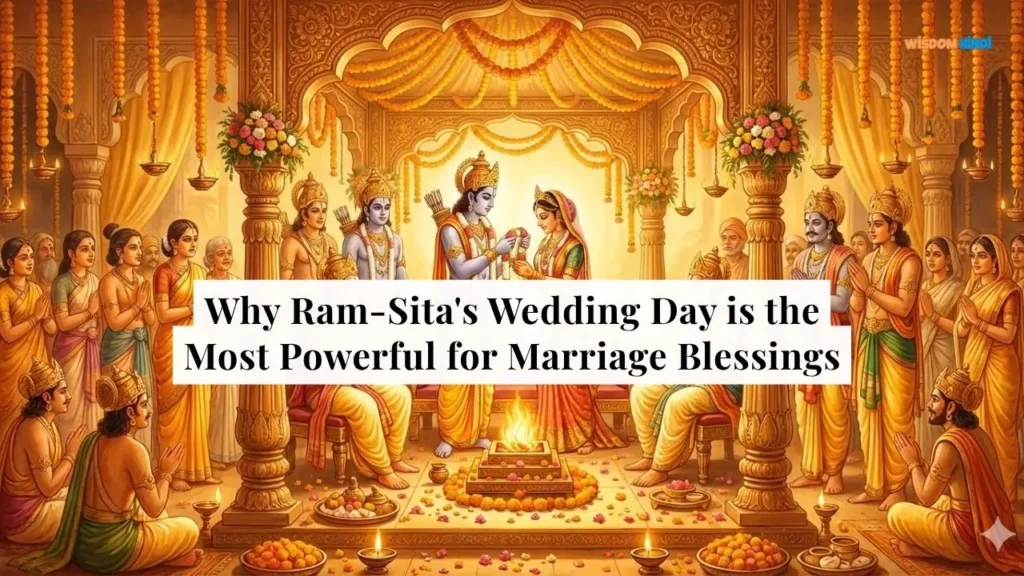
Significance of Vivah Panchami: In Hinduism, Vivah Panchami is celebrated on the fifth day of the bright fortnight of the month of Margashirsha. This is the sacred day when Sita, daughter of King Janak of Mithila, was married to the most dignified man, Shri Ram, in the Treta Yuga. This festival is celebrated with great enthusiasm and prosperity, especially in North India, Mithila, Ayodhya, and Nepal. Ram and Sita are considered the epitome of the ideal couple in Indian culture. Therefore, worshipping them on this day ensures a happy and dignified married life.
Read More: The Miraculous Remedy of Burning Camphor on a Betel Leaf
The Significance of Vivah Panchami
Vivah Panchami is considered very auspicious and fruitful for married life. Worshipping Lord Ram and Mother Sita on this day removes all obstacles in marital life, increases love and harmony between husband and wife, and unmarried couples find their desired life partner. Reciting the Ramcharitmanas or Ramayana maintains peace and tranquility in the home and eliminates family conflicts.
Rama attained the status of Purushottam by fully upholding the principles of righteousness in his life, while Sita demonstrated the ultimate devotion to her husband. Worshipping these two people, inspired by their ideal lives, awakens the spirit of dignity, love, and sacrifice in married life.
The Significance of Vivah Panchami Featured
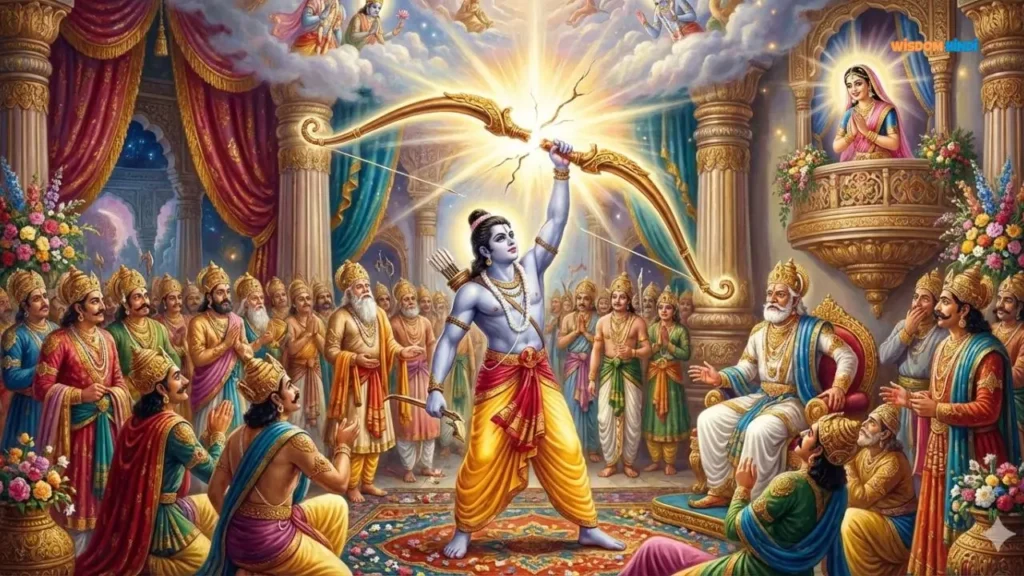
In the Treta Yuga, King Janak, the king of Mithila, was a very religious man. He declared that his daughter Sita would be married to the bravest man who could lift and string Lord Shiva’s mighty bow, Pinaka. Many powerful kings and emperors from India and abroad attended this swayamvara, but none could even move it.
At the behest of Guru Vishwamitra, Lord Rama stepped forward and, with such force, lifted the great bow. While stringing it, he pulled it with such force that the bow broke into two pieces with a terrifying sound. Everyone was astonished by this sight. Mother Sita, overjoyed, placed the garland around Lord Rama’s neck.
The gods showered flowers from the sky, and all directions were filled with joy. After this, King Dasharatha arrived in Mithila from Ayodhya with a procession of wedding guests, and the marriage of the four brothers, Ram, Lakshman, Bharat, and Shatrughan, was solemnized with great pomp and show.
Vivah Panchami Puja Method
On the day of Vivah Panchami, bathe in the morning, wear clean clothes, and clean the place of worship in your home. Install an idol or picture of Ram and Sita in the place of worship. Then, resolve: “Today, on the auspicious occasion of Vivah Panchami, I worship Shri Ram and Janaki in memory of their marriage.” After this, perform the puja in these steps:
- Offer yellow clothes to Lord Rama and a red scarf to Mother Sita.
- Recite or listen to the wedding episode described in the Balakanda of the Ramayana.
- Chant the mantra “Om Janakivallabhaaya Namah” or “Jai Siya Ram” as much as possible.
- Tie a knot in the hands of the idols of Ram and Sita, meaning a string tied between them.
- Offer incense, lamps, and naivedya (sweets, fruits).
- Perform aarti for Ram and Sita, offer food, and distribute prasad.

A Special Tradition
In Mithila and Nepal, marriages are not performed on Vivah Panchami. This is because Mother Sita’s married life was extremely traumatic—she endured hardships like exile, abduction by Ravana, and the Agni Pariksha (fire test). People fear that marrying on this day might also bring misery to their daughter’s life. This is why, when narrating the Ramayana on this day, the story is concluded with the wedding episode and no further tragic events are recounted.
Conclusion–Vivah Panchami’s significance
Vivah Panchami is not just a festival but a remembrance of the ideals of married life. By worshipping Shri Ram and Sita on this day, we can light the lamp of dignity, love, sacrifice, and trust in our own lives. On this auspicious festival, we wish that everyone’s married life be filled with happiness, peace, and prosperity through the grace of Ram and Janaki.
FAQ- Vivah Panchami’s significance
What should be done on Vivah Panchami?
Offer yellow clothes to Lord Ram and a red scarf to Mother Sita. Recite or listen to the marriage episode described in the Balakanda of the Ramayana. Chant the mantra “Om Janakivallabhaaya Namah” or “Jai Siya Ram” as much as possible. Tie a knot (a string) between the hands of the idols of Ram and Sita. Offer incense, lamps, and naivedya (sweets, fruits). Perform aarti for Ram and Sita, offer food, and distribute prasad.
Who was married on Vivah Panchami?
Vivah Panchami is the sacred day when Sita, daughter of King Janak of Mithila, was married to the most dignified man, Shri Ram, in the Treta Yuga.
Why is Vivah Panchami celebrated?
Vivah Panchami is very important in Hinduism. It is the day on which Lord Rama and Mother Sita were married, and it is also the day on which Tulsidas completed the Awadhi version of the Ramcharitmanas.

