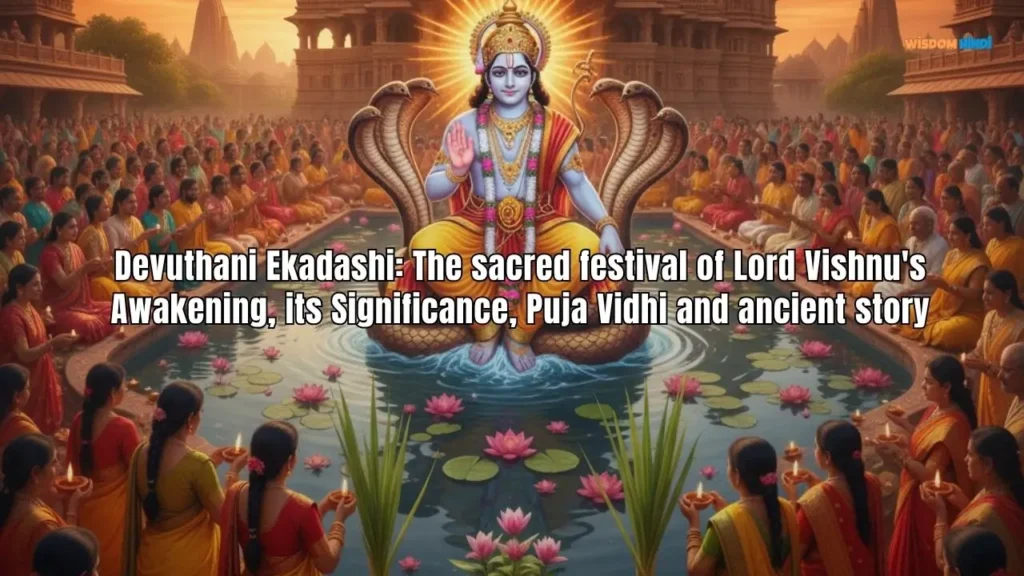
Dev Uthani Ekadashi Puja Vidhi: Ekadashi fasts are essential in Hinduism. The Ekadashi of the Shukla Paksha (bright fortnight) of the month of Kartik is called Dev Uthani Ekadashi or Dev Prabodhini Ekadashi. This festival occurs after Diwali and marks the awakening of Lord Vishnu from a four-month yogic sleep. It is believed that he goes into rest from Savan Shukla Ekadashi and awakens on Kartik Shukla Ekadashi. All auspicious events of the day, such as weddings and housewarming ceremonies, resume. We will discuss the significance of Dev Uthani Ekadashi, its story, and worship method.
Significance of Dev Uthani Ekadashi
Dev Uthani Ekadashi is celebrated on the Shukla Ekadashi of the month of Kartik. According to religious texts, Lord Vishnu enters yogic sleep on Sheshnag in the Kshirsagar during Chaturmas. They also go to sleep on Devshayani Ekadashi, which falls in the month of Sawan, and awaken on Devuthani Ekadashi in the month of Kartik. During this period, all auspicious functions are postponed for four months because the deities remain asleep.
Read More: Miraculous Astrological Remedies for Amla Navami will Balance Your Planets
Only after Devuthani Ekadashi do auspicious ceremonies like marriage, tonsure, and naming ceremonies commence. The festival is also associated with the agricultural society; during this time, crops like wheat, market, cotton, and sugarcane ripen. These are included as ingredients in the puja, which shows gratitude towards nature.
Observing the Devuthani Ekadashi fast destroys sins, bestows virtue, and, by the grace of Lord Vishnu, leads to salvation. This day is also the day of Tulsi Vivah, which continues until the full moon of the month of Kartik. Overall, this festival symbolizes awakening from sleep, the transition from inauspicious to auspicious.
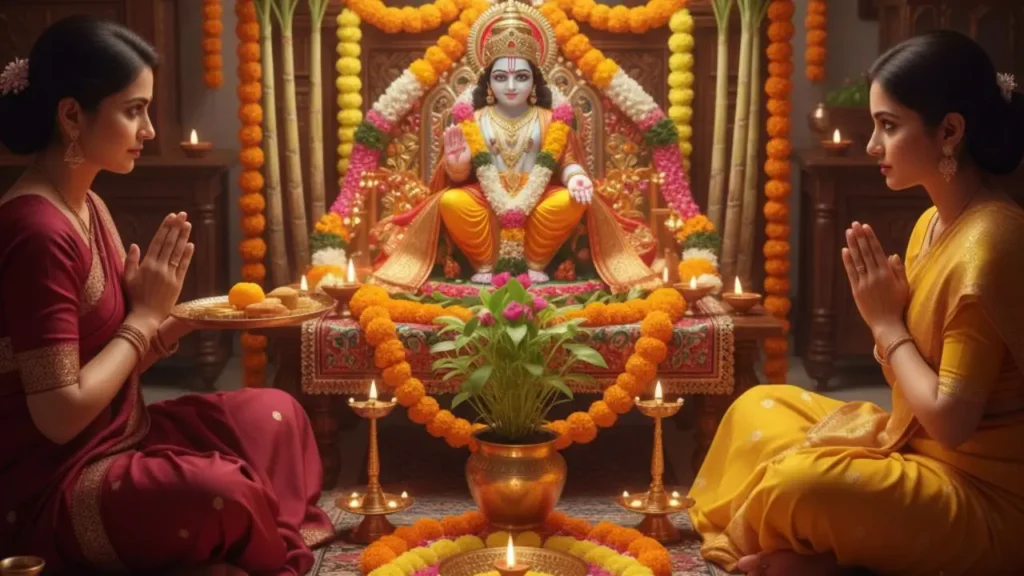
This is the Traditional Worship Method for Devuthani Ekadashi
The Devuthani Ekadashi puja begins during the day and concludes in the evening. Cleaning the house before performing this puja is essential. Observe a fast or consume satvik food on this day.
Devuthani Ekadashi Puja Materials
- Deity Mark: Images of Lord Vishnu and other deities are made from clay or cow dung.
- Grains: Wheat or millet.
- Fruits and vegetables: Leafy radishes, water chestnuts (seasonal fruits), oranges, guavas, and other seasonal fruits.
- Other foods: Peanuts, sweet potatoes, puffed rice, sugar candy, sweets, and homemade churma or halwa.
- Sugarcane: An integral part of the puja.
- Lamp and Dakshina: A ghee lamp and some currency.
- Cotton: In some places, cotton is harvested during this season.
- Paraat: To cover all the items.
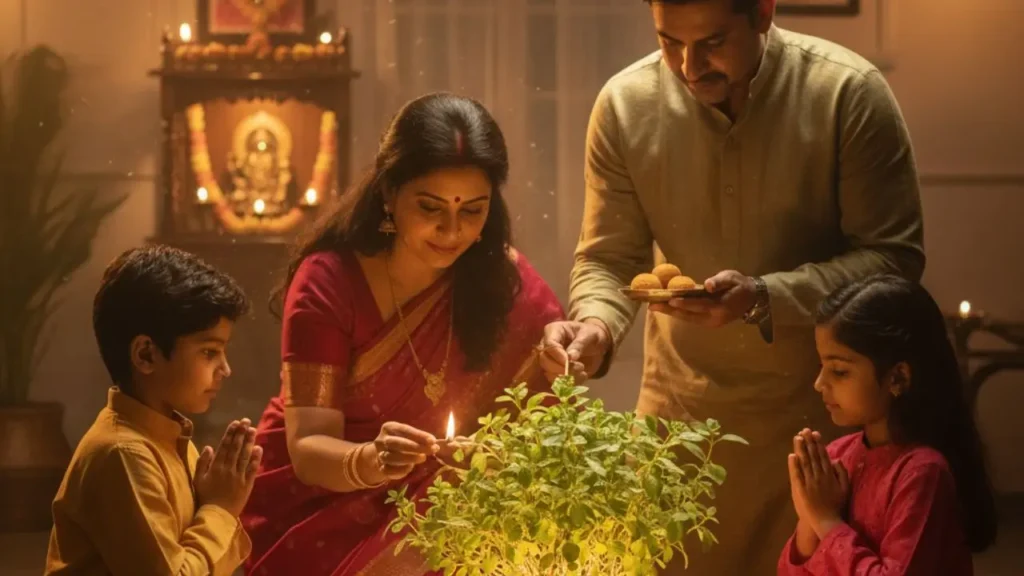
Dev Uthani Ekadashi Puja Vidhi Step-by-Step
Daytime Preparation: First, make a mark for the deities and scatter wheat or bazaar around it. Then arrange radishes, water chestnuts, fruits, peanuts, sweet potatoes, candy, sweets, churma or halwa, and sugarcane. Include a ghee lamp and dakshina (donation) if available.
Covering and Swastika: After placing the ingredients, place a large baraat upside down on top to cover everything. Draw a swastika symbol on the plate. Complete this by noon.
Evening Worship: After sunset, the Dev Utthaan begins. Gather all family members, take a pot of water, and light a ghee lamp together. While playing the baraat with a plate or spoon, sing traditional songs like “Utho Dev Jago Dev, the four-month sleep is over.” While removing the plate, remember Lord Vishnu and perform aarti.
Completion of the fast: After the puja, eat fruits. The next day, on Dwadashi, break the fast and donate to a Brahmin.
Ancient Tale: The King’s Test and God’s Grace
There is a very famous ancient tale that tells the story of Dev Uthani Ekadashi. Long ago, there was a devout king whose subjects were very happy. They all observed the Ekadashi fast and abstained from food. Once, Lord Vishnu, intending to test the king’s devotion, took the form of an Apsara (celestial nymph) and appeared before the king. The king was captivated by her beauty and married her, making her his queen.
The next day was Dev Uthani Ekadashi. The queen (a form of God) ordered that grains be sold in the market and non-vegetarian food be cooked in the palace. The king refused due to the Ekadashi fast. The queen then reminded him of the condition she had set during their marriage: that he must obey her every command. She threatened to have the eldest prince beheaded if he refused to eat.
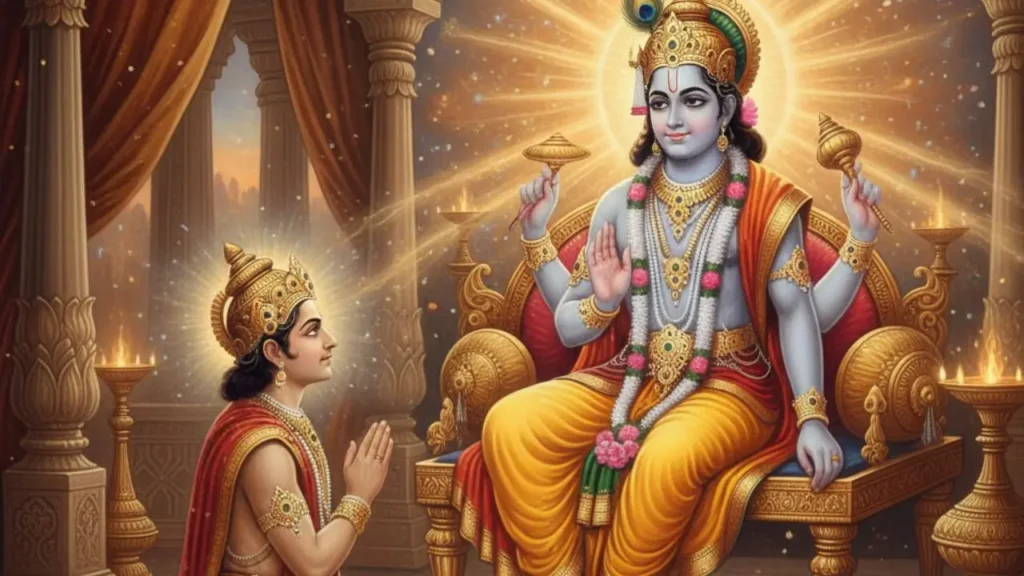
The king was caught in a dilemma of religion, so the elder queen advised him not to abandon his religion and sacrifice the prince. The prince agreed to sacrifice his elder brother to protect his father’s religion. As soon as the sword was raised, Lord Vishnu appeared in his true form and said, “King, you have passed the test. Your dharma has remained steadfast. Ask for a boon.”
The king asked for a boon that God would always shower his blessings on him and save him. Then a plane descended from the sky. The king handed over his kingdom to his son and boarded the plane, departing for Vaikuntha. This story teaches that true devotion makes no compromises. Listening to and reading the story brings Lord Vishnu’s blessings, just as the king received.
The prayer is: “O Vishnu, bless us just as you saved the king.”
Conclusion
The Dev Uthani Ekadashi fast is significant not only because it opens the door to auspicious events. The seasonal ingredients included in the puja ritual connect us with nature, while the story inspires us to protect dharma. Celebrate this festival with your family, observe the fast, and listen to the story. This will not only bring virtue but also bring happiness and prosperity to your home.
FAQ- Dev Uthani Ekadashi Puja Vidhi
Why is Dev Uthani Ekadashi celebrated?
According to religious texts, Lord Vishnu enters a state of yogic sleep on Sheshnag in Kshirsagar during Chaturmas. He also falls asleep on Devshayani Ekadashi in the month of Sawan and awakens on Devuthani Ekadashi in the month of Kartik. During this period, all auspicious functions are postponed for four months because the deity remains asleep.
Why is Tulsi Vivah performed on Devuthani Ekadashi?
Lord Vishnu blessed Tulsi that he would marry her in the form of Shaligram. On Devuthani Ekadashi, Lord Vishnu awakens from his four-month yogic sleep, after which all auspicious functions begin, beginning with the marriage of Lord Vishnu and Tulsi.
