How to Practice Self-Love: Friends, have you ever thought that we give so much love to others, but can’t find time for ourselves? Probably not! Today I’m sharing something with you that can change your life, and that is self-love. Yes, loving yourself isn’t some fancy trend; it’s a habit that can make your life happier, stronger, and more peaceful.
If you’re wondering what self-love is, know that it’s not just looking at yourself in the mirror and saying, “Wow.” Rather, it’s accepting yourself unconditionally, flaws, strengths, mistakes, and all. It’s not selfishness; it’s a deep respect for your mind and body.
In today’s busy era, where everyone’s life on social media seems perfect, loving yourself is like a superpower. So, in this article, let’s learn how to love ourselves and understand it step-by-step in a beginner’s guide. This article is packed with real-life tips so you can easily incorporate them into your life.
Read More: How to Start Meditation? A Complete Guide for Beginners
The Core Foundations of Self-Love: Through the Lens of Kristin Neff
The easiest way to understand self-love is through psychologist Kristin Neff’s Self-Compassion Theory. This theory holds that there are three pillars of self-love that give your life a strong foundation. Not just a theory but a daily practice that builds you from the inside out:
- Self-Kindness: Instead of telling yourself, “You’re an idiot” during tough times, give yourself a hug. For example, if a project fails, say, “Oh well, these things happen. I’ll do better next time.” This kindness protects you from stress.
- Common Humanity: Remember, making mistakes or failing isn’t just your story, it’s everyone’s. You are not alone. This thought prevents you from feeling isolated and makes the world feel more connected.
- Mindfulness: Don’t judge your negative feelings. Just observe them, like passing clouds in the sky. Instead of saying, “I am sad,” say, “Sadness is coming up right now.” This balance keeps you calm.
Adopting these foundations makes self-love a part of your life. Now let’s talk about practical steps, especially for beginners.

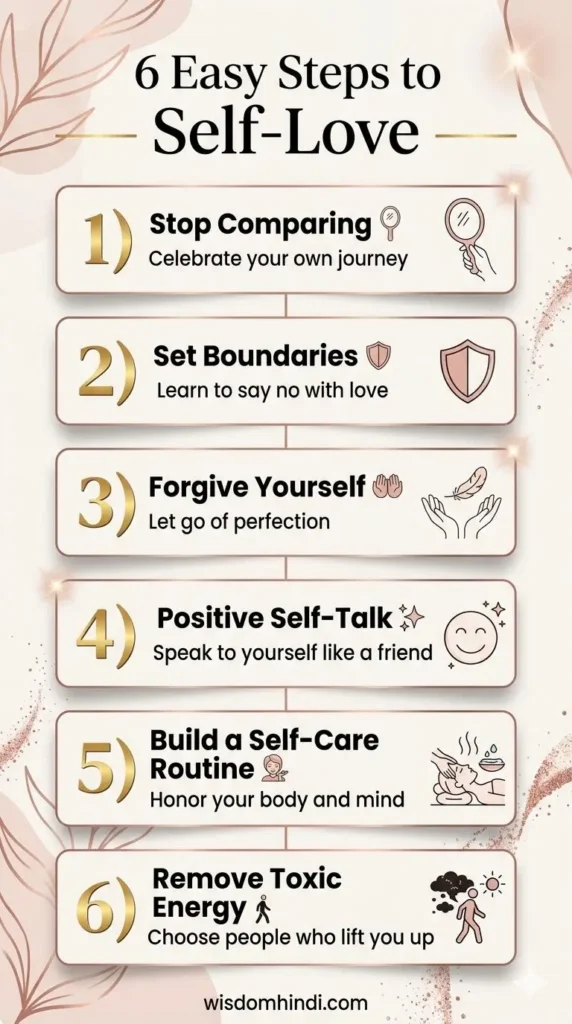
How to Learn to Love Yourself? 6 Easy Beginner Steps
Self-love isn’t magic that happens overnight; it’s a chain of small habits. If you’re a beginner, start with these 6 easy steps. They’re very simple and you can try them starting today.
Stop comparing yourself to others—celebrate your own story.
Do you feel inadequate seeing the glamorous lives on Instagram? This trap is for everyone. But remember, those are filtered pictures, not real life. Own your journey. Every day, write in a journal: “What did I do well today?” This is where the journey of self-love begins.
Set your boundaries—learn to say ‘no’.
Don’t lose your true self while trying to make everyone else happy. Be the guardian of your own energy. If a request is draining you, say no kindly. For example, “I’m sorry, I can’t do that right now.” This boundary-setting is a signal of self-love that your worth matters.
Learn to forgive yourself—let go of perfection.
Perfection is a myth. Don’t be afraid to make mistakes, and instead of feeling bad by repeatedly remembering past errors, take lessons from them. Adopt the mantra, “I made a mistake, but I’m learning.” The habit of self-forgiveness (Self-forgiveness) not only lightens the mind but also gives you the strength to move forward.
Adopt positive self-talk—talk to yourself like a friend
Would you ever speak badly to your best friend? So why do it to yourself? Challenge negative thoughts like “I’m a failure.” Try affirmations: “I am perfect just the way I am.” Repeat this in front of the mirror every morning for 5 minutes. Gradually, it will transform your self-talk.
Create a self-care routine —take care of your body and mind
Self-care isn’t selfish, it’s a necessity. Get at least 8 hours of sleep every day, because fatigue is the biggest enemy of self-love. Make healthy meals and a 30-minute walk a routine. It’s your body’s way of saying thank you. Spend 10–15 minutes each day reading a book, listening to music, or just breathing. This small break brings a big change.
Stay away from toxic relationships—choose positive people.
Keep your distance from those who drain your energy or make you feel down. Instead, surround yourself with friends who cheer you on. Remember, loving yourself means protecting your worth.
Benefits of Self-Love: Why It Will Change Your Life?
Now, imagine what would happen if you started to love yourself. Research shows that self-love makes you happier, more optimistic, and more resilient. Depression, anxiety, and the fear of failure will decrease. It not only boosts mental health but also improves relationships, work, and overall life. One study found that people who practice self-love handle stress 30% better. So why not start today?
Conclusion: How to Practice Self-Love
yFriends, self-love is a journey, not a destination. It takes patience and commitment, but the results are amazing. Take a small step today. Say an affirmation or schedule some me-time. Tell yourself, “I am worthy of this.” If you liked this article, share in the comments what your first step will be. And yes, save this ‘How to Learn to Love Yourself?’ guide, because it’s going to be your best friend for life.
Are you ready for this transformation? Don’t forget to like, share, and subscribe. Share your story in the comments.
(Note: This article is based on expert research and personal experience. If your mental health concerns feel overwhelming, consider speaking with a trained professional who can guide and support you.)
FAQ: How to Practice Self-Love
What does it mean to practice self-love?
Practicing self-love means honoring your own feelings, needs, and boundaries. To adopt it, you can incorporate some simple habits like stopping comparisons with others, forgiving your mistakes, practicing positive self-talk, and taking care of your body and mind. Small self-care habits like getting enough sleep, meditating, and having “me-time” are also a great start to self-love.
What is self-love?
Self-love means accepting yourself unconditionally. This includes accepting your flaws as well as your strengths and mistakes. It is not selfishness, but a feeling of respect and care for your mind and body. Self-love helps a person stay mentally strong, calm, and happy.
How to give yourself self-love?
To give yourself self-love, first be kind to yourself. Instead of blaming yourself for your mistakes, learn from them. Practice positive thoughts and affirmations daily, make time for yourself, adopt a healthy lifestyle, and surround yourself with people who inspire you. These small habits gradually build self-love.
What causes a lack of self-love?
A lack of self-love can stem from several causes, such as negative childhood experiences, constant comparison to others, pressure from social media, low self-confidence, or repeated failures. Self-love gradually diminishes when a person starts to see themselves as inferior to others. To improve this, it’s essential to practice positive thinking, self-acceptance, and mindfulness.
How do I love myself?
To love yourself, first learn to accept yourself. Understand your thoughts and feelings, practice self-care, and set your boundaries. Make time for yourself every day, celebrate your achievements, and speak positively to yourself. Gradually, this habit will lead you toward self-esteem and self-love.

3 thoughts on “Do You Love Yourself? If Not, Then This Guide is Just for You”