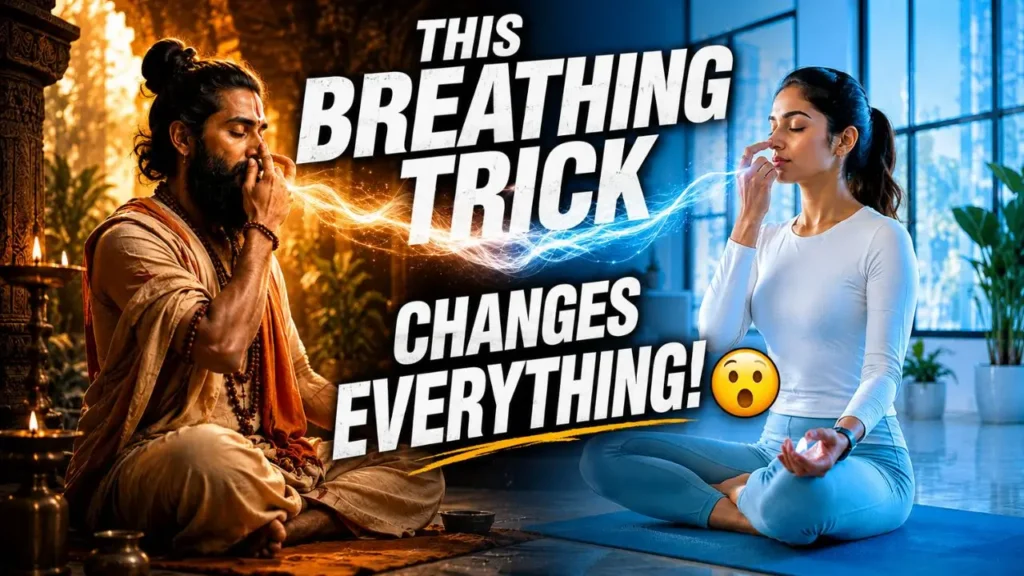
Pranayama vs Breathwork: Before her big presentation, Sarah sat frozen at her desk, heart racing, mind blank. Her colleague leaned over and said, “Just breathe. Slowly.” Two minutes later, something shifted.
Not magic. Not a coincidence. Just breath; the one thing your body does automatically, yet responds immediately when you take conscious control.
This is where Breathwork begins. But here is where most people get confused: Is Breathwork just another word for Pranayama? Are they the same thing repackaged for a Western audience? Not quite.
There’s real overlap, but the origins, philosophy, and purpose are genuinely different. Let’s break it down clearly, without the fluff.
What is Breathwork?
Breathwork means consciously controlling your breathing. It means paying attention to the process that normally runs automatically and changing its pattern. People use it for relaxation, increasing focus, emotional regulation, or body awareness.
It’s not a single fixed technique. There can be different patterns, such as slow breathing, nasal breathing, holding the breath, or changing the rhythm. The main point is that you make involuntary breathing conscious for a short time.
Read More: Connect to Your Higher Self: 8 Powerful Practices
What is the connection between breathing and the body?
Our breathing patterns can affect how the autonomic nervous system functions. When breathing is fast and chest-driven, the sympathetic system (fight-or-flight) can become more active. When breathing is slow, deep, and nasal, it can help shift toward the parasympathetic system (rest-and-digest).
This doesn’t mean that changing your breathing will make all your problems disappear. But breathing patterns can influence the body’s arousal state. That’s why breathing exercises are discussed when it comes to stress, anxiety, or focus. It’s best to view them as a complementary practice rather than a substitute for medical treatment.
What is Pranayama?
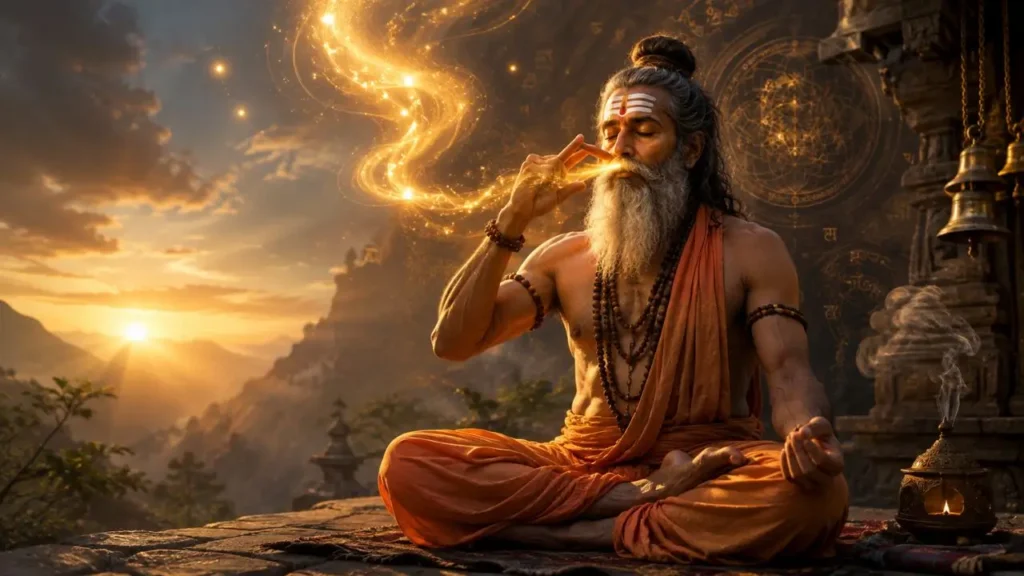
Pranayama is an important part of the yoga tradition. It is mentioned in the Upanishads, the Bhagavad Gita, and Patanjali’s Yoga Sutras. The word is made up of two parts: ‘Prana’ (life force or vital energy) and ‘ayama’ (extension or control).
From a traditional perspective, Pranayama is not just a deep breathing exercise. Its purpose is considered to be purifying the body’s subtle energy systems (nadis) and preparing the mind for meditation. It involves three main processes—Pūraka (inhalation), Kumbhaka (retention), and Rechaka (exhalation).
Some well-known practices include:
- Anulom-Vilom / Nadi Shodhan
- Bhramari
- Ujjayi
- More intense techniques like Kapalbhati and Bhastrika
These practices are typically paired with yoga practice, ethical discipline, and meditation. In other words, Pranayama is not just a technique but part of a comprehensive lifestyle approach.
Modern Breathwork: What Is It?
Modern Breathwork is an umbrella term. It covers a range of conscious breathing approaches developed mostly through the 20th century and beyond, often focused on therapeutic, emotional, or physiological outcomes. Here are a few well-known examples:
- Holotropic Breathwork: Developed by psychiatrist Stanislav Grof, this uses accelerated breathing combined with evocative music to access non-ordinary states of consciousness and support emotional processing. It’s typically done in a guided group setting.
- Rebirthing Breathwork: Based on connected circular breathing, this approach works with deeply held emotional patterns, often tracing back to early life experiences.
- Buteyko Method: Developed by Ukrainian doctor Konstantin Buteyko, this focuses on reducing over-breathing and restoring carbon dioxide balance. It’s often used for conditions like asthma and sleep apnea.
- Box Breathing: Used widely in military and high-performance settings, it involves equal counts of inhale, hold, exhale, and hold again.
One important thing to understand is that Modern Breathwork is not one unified system. Some approaches are gentle, some are intense. Some are used in clinical therapy, others in weekend wellness workshops. Grouping them all together would be like calling every Indian spice “curry.”
Pranayama vs Modern Breathwork
Pranayama is like an ancient river, it has a source, a direction, a philosophy behind every drop. It comes from the yogic tradition, rooted in texts like the Yoga Sutras of Patanjali. The breath here is not just air, it is prana, life force. The goal isn’t just relaxation. It’s purification of energy channels, preparation of the mind for meditation, and ultimately a path toward deeper self-awareness.
Modern Breathwork, on the other hand, is more like a collection of streams, each flowing toward a different destination. Some toward emotional healing. Some toward nervous system regulation. Some toward peak performance. There’s no single ancient text behind it, no unified spiritual framework. It’s largely shaped by Western psychology, neuroscience, and therapeutic practice.
Where they genuinely differ:
- Purpose: Pranayama sits within a complete spiritual lifestyle. Modern Breathwork is often standalone, outcome-focused.
- Context: Pranayama was traditionally taught slowly, in a guru-student relationship, as part of a much larger yogic path. Modern Breathwork is accessible through apps, workshops, and online courses.
- Techniques: Pranayama uses Puraka (inhale), Kumbhaka (retention), and Rechaka (exhale) as its core structure. Modern Breathwork techniques vary wildly from slow nasal breathing to rapid, circular, or rhythmic patterns.
- Philosophy: Pranayama acknowledges prana, nadis, and subtle energy. Modern Breathwork speaks the language of the autonomic nervous system, trauma response, and emotional regulation.
They can overlap. But they’re not the same river.
What Pranayama and Modern Breathwork Actually Share
Strip away the labels for a moment. What’s left is surprisingly simple, both ask you to pay attention to something you’ve been ignoring your whole life.
Your breath has been happening without your permission since the day you were born. Every single minute. And most of us have never once stopped to really feel it.
Both Pranayama and Modern Breathwork begin exactly there, with that pause. That moment of noticing.
Beyond that starting point, they also share:
The mind-body bridge. Both traditions recognize that breath isn’t just physical. Your breathing can influence your mental state, emotions, and response to pressure. That connection is real and both systems, ancient and modern, have built entire practices around it.
The power of slowing down. Whether you are practicing Nadi Shodhana or a simple box breathing sequence, the act of deliberately slowing your breath creates a different internal environment. Less reactive. More present.
Awareness before technique. The most experienced practitioners in both worlds say the same thing before you learn the method, learn to observe. Just watch the breath. That alone is more powerful than people expect.
Respect for the body’s signals. Neither Pranayama nor responsible Breathwork encourages pushing through discomfort. Both honor the body’s limits.
The real similarity isn’t technical. It’s this that both invites you to treat your breath as a tool, not just a function. And that shift in perspective, however you get there, tends to change things.
What should you keep in mind when starting breathwork?
Some intense practices are not suitable for everyone. If you experience dizziness, tingling, restlessness, or any unusual sensation, stop immediately. If you have a heart condition, epilepsy, high blood pressure, are pregnant, or have any other serious condition, consult a qualified healthcare professional before beginning.
Learn complex techniques (especially long breath-holding or very rapid breathing) under the guidance of an experienced teacher. Do not perform intense practice in water, while standing, or while driving.
Simple Breathing Practice for Beginners
This is a very gentle practice:
- Sit comfortably, keeping your spine straight.
- Close your eyes and observe your normal breathing.
- Now inhale slowly through the nose to a count of 4.
- Exhale without pausing to a count of 6.
- Repeat for 5–7 minutes.
- At the end, return to normal breathing.
Do not force it. If you feel any discomfort, stop.
Some Common Myths About Breathwork
Myth 1: Breathwork means only deep breathing.
Reality: Deep breathing can be one part, but the patterns vary widely.
Myth 2: The faster the breath, the more benefit.
Reality: Fast breathing is used in some contexts, but for beginners, slow and controlled breathing is often more suitable.
Myth 3: Every breathwork technique is safe for everyone.
Reality: Suitability varies based on intensity and individual health.
Myth 4: Pranayama and modern breathwork are exactly the same thing.
Reality: Both are based on conscious breathing, but they differ in origin, philosophy, and purpose.
Conclusion: Pranayama vs Breathwork
Pranayama and Modern Breathwork aren’t rivals. They’re different roads that sometimes run parallel.
One carries centuries of spiritual wisdom. The other brings modern science and therapeutic insight. What matters most is why you’re showing stress relief, emotional healing, spiritual growth, or simply better focus.
Start simple. Start gentle. And before you learn any technique, just sit quietly and notice your breath for one minute. That single minute might surprise you.
FAQ: Pranayama vs Breathwork
Is Pranayama the same as Breathwork?
Not exactly. Pranayama is a specific practice rooted in ancient Indian yogic tradition, it works with prana (life force) and follows a structured spiritual framework. Breathwork is a broader modern term that includes many different conscious breathing techniques developed largely in the West. They overlap in method but differ significantly in philosophy, purpose, and context. Calling them the same would be like calling Ayurveda and modern naturopathy identical related, yes. Identical, no.
Can complete beginners try Breathwork or Pranayama safely?
Yes, but with one condition: start gently. Simple techniques like slow nasal breathing or a basic 4-count inhale, 6-count exhale are generally accessible for most healthy adults. Where people get into trouble is jumping straight into intense practices, rapid breathing, long breath holds, or emotionally intensive sessions, without proper guidance. If you have any heart condition, epilepsy, high blood pressure, or are pregnant, always check with your doctor first. The breath is powerful. Respect that from day one.
How quickly can conscious breathing actually affect stress?
Faster than most people expect. Research suggests that slow, controlled breathing can influence the autonomic nervous system within just a few minutes, shifting the body away from a stress response toward a calmer state. That said, it’s not a magic switch. Results vary from person to person, and a single session won’t undo chronic stress. Think of it less like medicine and more like exercise, the real benefits build with regular, consistent practice over time.
Which is better for emotional healing, Pranayama or Modern Breathwork?
It depends on what you mean by healing. Modern Breathwork approaches particularly Holotropic Breathwork or Rebirthing are specifically designed around emotional processing and release. They’re often used in therapeutic settings for that reason. Pranayama, while deeply calming and transformative, approaches emotional wellbeing more indirectly through nervous system balance, energy purification, and meditative awareness. If emotional release is your primary goal, a qualified Modern Breathwork facilitator might be a better starting point. If you’re looking for something more gradual and spiritually grounded, Pranayama fits better.
Do I need a teacher, or can I learn from YouTube?
For basic, gentle techniques, yes, YouTube and apps can be a reasonable starting point. A simple 4-6 breathing pattern or basic Anulom-Vilom doesn’t require in-person supervision for most healthy people. But for anything more advanced, extended breath retention, Holotropic sessions, Kapalbhati at intensity, or any technique that makes you feel dizzy or emotionally overwhelmed please find a qualified teacher. Some experiences that come up during intensive breathwork can be surprising and need proper support. Free content online is a great introduction. It’s not a substitute for real guidance when things get deeper.
