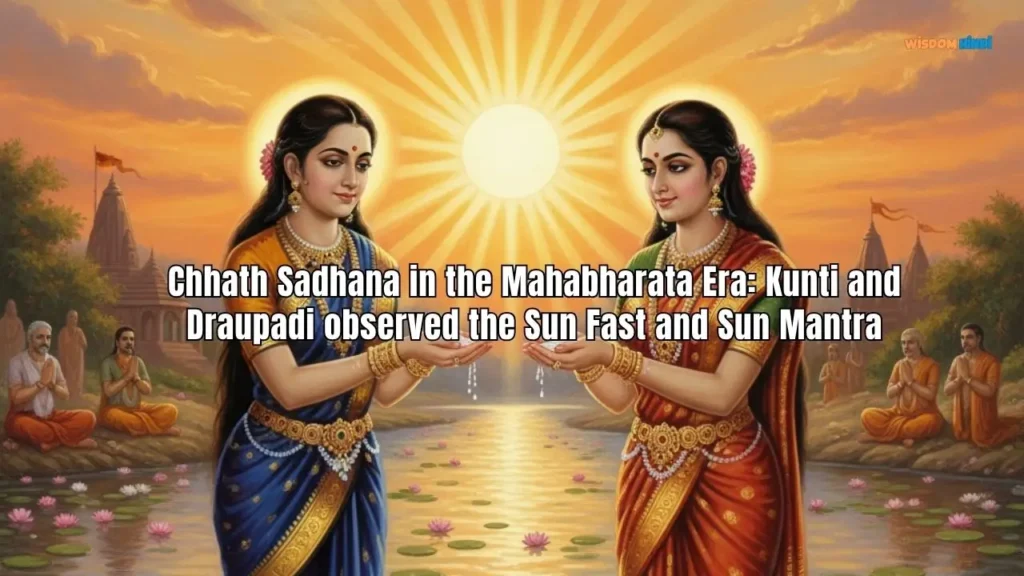
Chhath Puja History: In Indian culture, women have always been the epitome of patience and austerity. Ages have changed, but women and their devotion have always remained unwavering. Women have always dedicated themselves to truth, power, and the welfare of their children.
We find divine examples of this even in the Dwapar Yuga. Kunti and Draupadi are two examples of those who observed the Chhath fast during the Mahabharata period. While Kunti observed the Chhath fast to attain the joy of motherhood, Draupadi worshipped the Sun for the sake of religion and family. Their worship of the Sun paved the way for a new chapter in human life.
Yes, just as it is believed that Mother Sita spread the importance of Chhath Puja to the masses in the Treta Yuga, it was Mother Kunti and Draupadi who initiated Chhath Puja in the Dwapar Yuga. Both of them revealed the awakened form of women’s power to the world. The Chhath fast observed by Mother Kunti and Goddess Draupadi not only holds mythological significance but also reflects devotion and sacrifice. It shows that when a woman offers arghya to the Sun, she awakens not the deity but the inner radiance within.
Read More: First Human Commitment to Sun Worship was Made by Mother Sita in the Form of the Chhath Vrat
Chhath Vrat Observed by Mother Kunti
Mother Kunti was the adopted daughter of King Kuntibhoja. Kunti was extremely radiant and religious. It is said that once Maharishi Durvasa visited King Kuntibhoja’s kingdom and stayed in his palace. Mother Kunti served Maharishi Durvasa faithfully. Maharishi Durvasa was so pleased with Mother Kunti’s devotion that he blessed her with a divine mantra, saying that whichever deity she meditates upon while chanting this mantra would immediately grant her the boon of a son. Mother Kunti gladly accepted this boon.
The Puranas from the Mahabharata period describe how one day, on the sixth day of the bright fortnight of Kartik month, Mother Kunti was bathing in a holy river at sunrise. She then donned clean clothes and began her penance, facing the sun. She chanted a mantra given by Maharishi Durvasa and meditated on the Sun, after which the Sun God, pleased with her, blessed her with a bright son.
This child later became known as Karna. Karna’s body was adorned with the Sun’s armor and earrings, which is why Karna is also known as Karna, the son of the Sun. Over time, this Shashthi Puja performed by Mother Kunti became known as the Chhath fast. It is said that if a woman worships the Sun God on this day and prays for the boon of motherhood, the Sun God blesses her with a child.
Chhath Vrat Observed by Draupadi
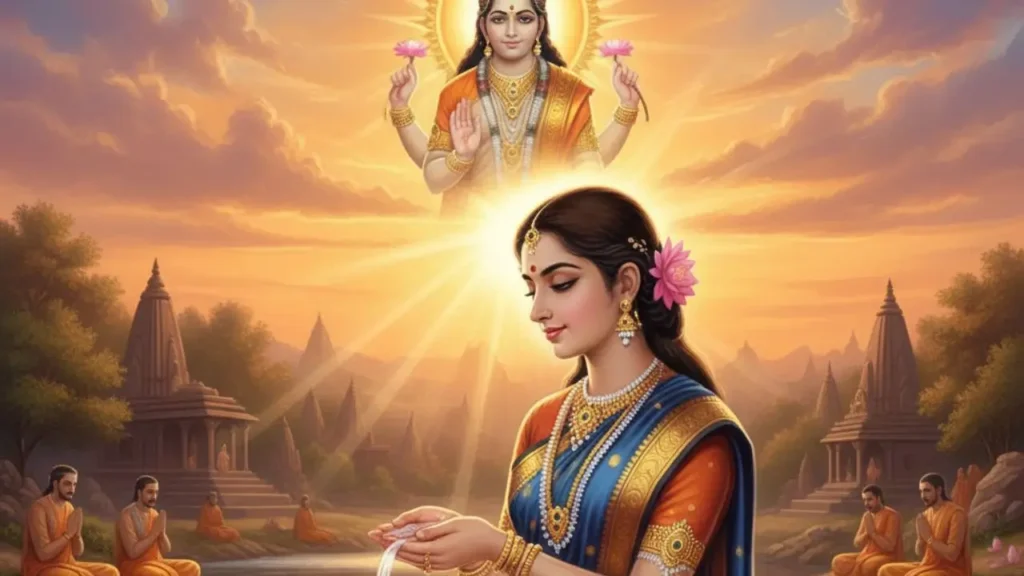
Draupadi also performed Surya Sadhana (spiritual practice) and this brought light back into her life. Draupadi, known as Panchala Kanya (a girl born from a yajna), is also known as Yajnasaini. Draupadi was the daughter of the Panchala king, blessed with supernatural powers and boons. Draupadi is also said to be Krishna’s friend. She was extremely beautiful, intelligent, and religious. Her life faced many hardships, but she never abandoned her devotion and spiritual practice.
It is said that during the Pandavas’ exile, Maharishi Lomash met Draupadi and explained the significance of the Chhath Vrat. He told Draupadi that observing the Chhath Vrat and worshipping Goddess Shashthi eliminates life’s troubles and brings prosperity to the family. Hearing this, Draupadi also resolved to meditate on Goddess Shashthi and the Sun God, remaining waterless and offering prayers to the Sun God at sunrise and sunset. And she did just that. She observed the Chhath fast, remaining waterless and offering prayers to the Sun God at sunrise and sunset. After this, happiness gradually returned to the Pandavas’ lives, and righteousness was established in the kingdom, and Draupadi’s honor was restored.
The secret of the Surya Mantra chanted by Mother Kunti and Draupadi
Surya Mantra Aditya Stuti Mantra by Kunti
It is described in the Adi Parva of the Mahabharata that when sage Durvasa gave a boon to Mother Kunti, he taught her the mantra of invoking God. This mantra was so powerful that the gods would appear immediately. When Mother Kunti meditated on the Sun God then she chanted this mantra
Om Namo Bhagwate Diwakaraya.
Sahasrakiranaya Namah.
Tejasaam Pataye Namah.
Loksakshine Namah.”
After this, the Sun God himself appeared before them, and this marked the beginning of the Surya Shashthi fast, which later became famous as the Chhath fast.
Vedic Sources of Surya Worship by Draupadi
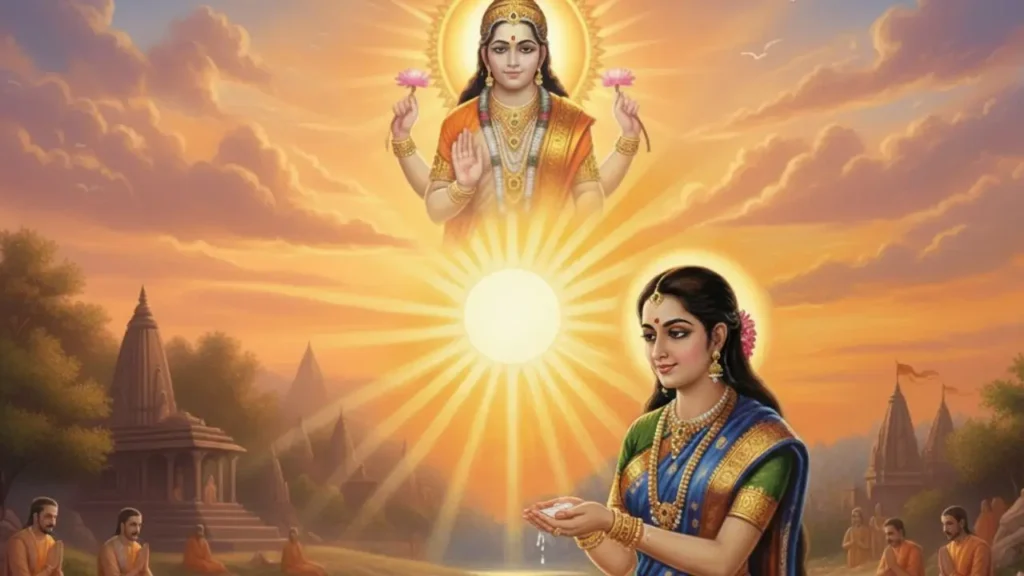
When Maharishi Lomash explained the significance of the Shashthi fast to Draupadi, Draupadi resolved to meditate jointly on Surya Dev and Chhath Maiya. During this time, Draupadi observed the Surya Shashthi fast to alleviate all the troubles of the Pandavas. When she observed this fast, she chanted the following mantra:
Om Adityaya Namah
Sahasransho, Vishvabharta Namo’astu te
Sankatname Vimokshaaya Chhaththi Devi Namo’stute.
The worship of the Sun by Mother Kunti and Draupadi teaches us that no matter how dark life may be, one should never stop looking towards the Sun. The sun is the center of power, and from it, the earth and the power of creation expand. The mantras chanted by Mother Kunti and Draupadi are not mere words but embody self-power, self-control, and faith. Therefore, the Chhath fast observed by Mother Sita in the Treta Yuga and by Mother Kunti and Draupadi in the Dwapar Yuga remains immortal and has always conveyed the message that returning to light is the true form of spiritual practice.
Related Article:
- Perform Chhath Puja Rituals Even While Living Abroad
- How to Observe Chhath Vrat and Worship During Menstruation
FAQ- Chhath Puja History
Did Draupadi perform Chhath Puja?
Yes, Draupadi did perform Chhath Puja. Draupadi observed the Chhath fast, remaining waterless and standing in water, offering prayers to the Sun God at sunrise and sunset. After this, happiness gradually returned to the Pandavas’ lives, righteousness was established in the kingdom, and Draupadi’s honor was restored.
