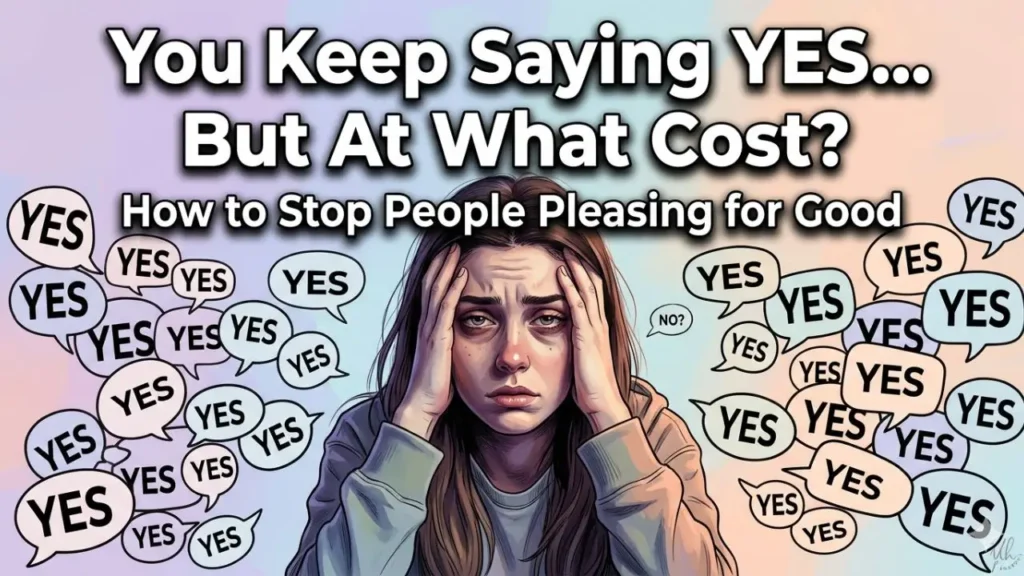
You’re living for others’ happiness—
but when will you live for your own?
How to Stop People-Pleasing: Friends, imagine you’re exhausted. You’ve had a hectic day at the office. You come home just wanting to relax. Then the phone rings and your friend says, “Dude, I’m having a party tonight—you’re coming, right? It won’t be fun without you.”
You automatically say, “Yeah… I’ll definitely come.” The moment you hang up, you beat yourself up. Yet you still go to the party with a smile.
How many times has this happened to you?
If the answer is “a lot,” then you are a people-pleaser. And today, we’re here with a complete roadmap to break this habit for good. I will personally guide you like a life coach and share tips you can start applying right away. Let’s get started.
Read More: The 5-Minute Mind, Body & Soul Self-Care Routine That Actually Works for Busy People
What is People-Pleasing?
People-pleasing is the behavior in which you completely ignore your own needs, desires, and boundaries to try to please others, earn their approval, or avoid their disapproval.
In psychological terms, this is called the Fawn Response. It’s a survival strategy alongside fight, flight, or freeze. In childhood, when we learned that “if I’m a good kid, Mom and Dad will be happy,” that same pattern carried into our relationships as adults. In short, people-pleasing involves:
- Your happiness becomes dependent on the happiness of others.
- You’re afraid to say “no.”
- You start to see yourself as less important than others.
The Dangers of People-Pleasing
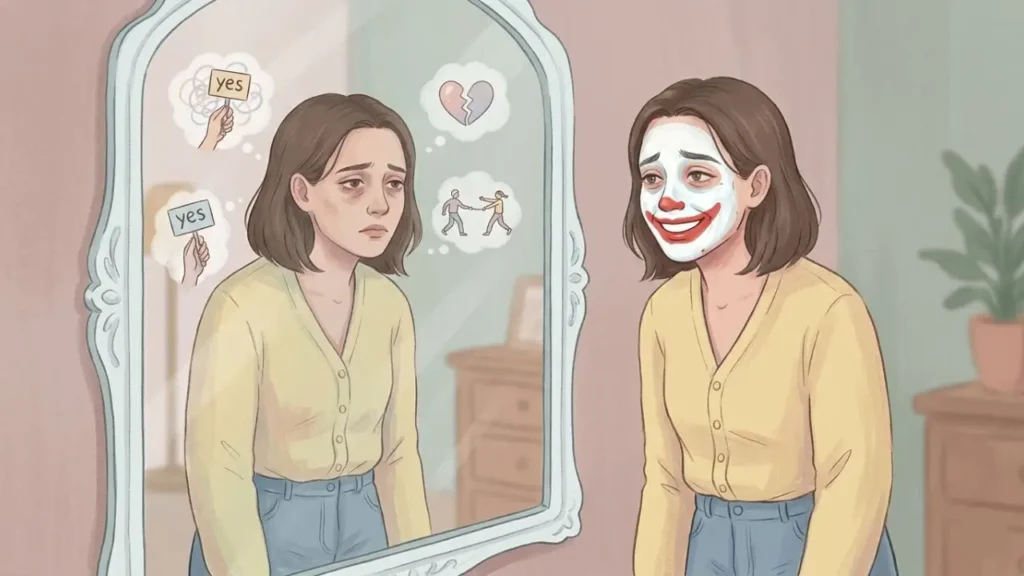
This habit of people-pleasing may seem innocent, but it’s dangerous. Learn how it affects our mental health, self-respect, and relationships:
Impact on Mental Health
Constantly meeting others’ expectations leads to stress, anxiety, and burnout. Resentment builds up inside. Often depression can also be triggered because you keep suppressing your emotions.
Self-Respect Disappears
When you repeatedly put your needs aside, your subconscious mind gets the message, “I am not important.” Gradually, your self-esteem erodes. People stop respecting you because you don’t respect yourself.
Relationships deteriorate
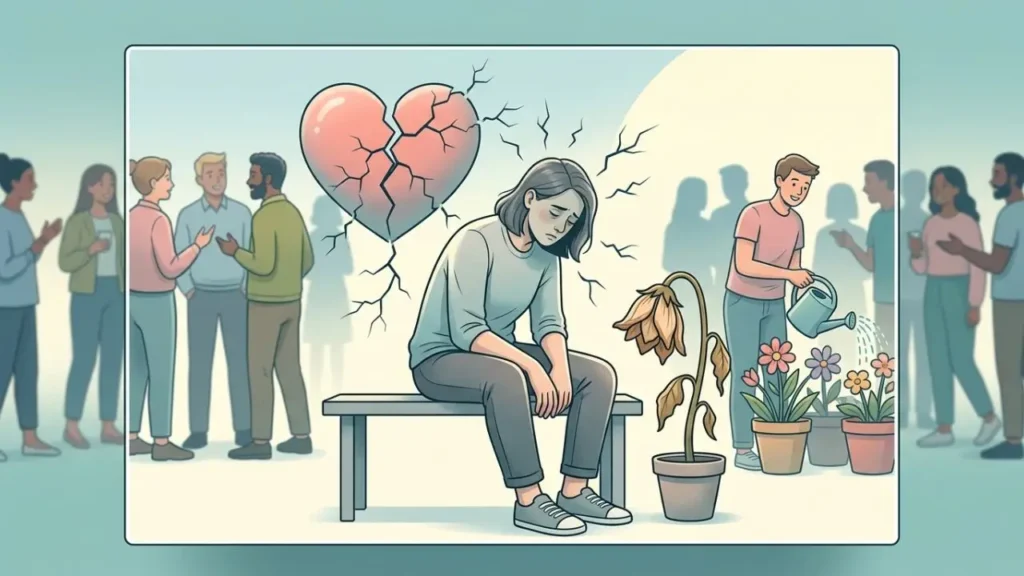
The habit of people-pleasing also has a negative impact on our relationships. Your friendships become one-sided, and your partner starts taking you for granted. Even within your family, your opinion loses value. As a result, you feel lonely even though you’re surrounded by people.
Why do people become people-pleasers?
The habit of people-pleasing doesn’t appear overnight. There are some deep-rooted reasons behind it. For example:
- Childhood experiences: If love was conditional- “you’ll get love if you study well”- then the child learns that to gain approval, they must suppress their own desires.
- Fear of rejection: “If I say no, people will leave me.” This fear is very deep.
- Low self-esteem: seeing yourself as inferior.
- Addiction to validation: getting happy over others’ praise.
The question is: are you still chasing approval like that child?
How to Quit the Habit of People-Pleasing?
Now let’s talk about the most important part. I’m going to share six practical steps that, when you apply one by one, will help you break free from people-pleasing:
Step 1: Increase self-awareness
Every time you’re about to say “yes,” pause for 10 seconds and ask yourself:
- Do I really want to do this?
- What’s the worst-case scenario if I say no?
Keep a journal and write down each day: Where did I sacrifice my needs today?
Step 2: Adopt the “Let Them” Theory (Mel Robbins)
This is the most powerful tool. If someone is judging you, not inviting you, or not listening to you, just “Let Them”—leave them to their own devices. Save your energy and focus on yourself. “Let Them” is the shortcut to mental peace.
Step 3: Prioritize yourself.
Taking care of yourself isn’t selfish; it’s a necessity. So:
- Set aside 30 minutes each day just for yourself and focus on your health or a hobby.
- Practice positive self-talk, like, “My time, my energy, and my happiness matter too.”

Step 4: Start Setting Boundaries
Setting boundaries is also crucial for dealing with people-pleasing. Let people know your limits in a polite way so they don’t take advantage of you. We’ll discuss this in more detail in the article.
Step 5: Learn to say no
Saying no isn’t arrogance; it’s about standing up for yourself. So if you’re not ready for something, don’t hesitate to say no. We’ll explore this in more detail in the upcoming steps.
Step 6: Celebrate your progress
Reward yourself for every small win. Completed a 7-day streak of saying no? Treat yourself to your favorite coffee.
How to learn to say “No”?
Saying “No” is the hardest but most liberating skill. “No” is a complete sentence. You don’t need to give an explanation. Here are some examples:
Friend’s party
Old way: “Yeah… okay, I’ll come”
New way: “Sorry, buddy, I can’t make it this time, but I’ll definitely come next time.”
Boss’s extra work
Old: “Yes sir, I will do it”. even if it is 11 PM.
New: “Sir, I am already committed to finishing this project. I will finalize it by 10 AM tomorrow.”
Family pressure
Old: “Yes, Mom, I’ll look at the marriage proposal.”
New: “Mom, I am not ready for marriage right now. When I am, I’ll let you know.”

Powerful Sample Sentences (copy-paste):
- “I unable to do it this time.”
- “My schedule is already packed.”
- “I need a little time to think.”
- “Thanks for the offer, but I’ll decline.”
- “My priority is something else right now.”
Start with small “nos.” For example, refusing to give extra tip to the delivery boy. Your confidence will build.
Practical Ways to Set Boundaries
Boundaries are the greatest proof of your self-respect. Let’s explore some practical tips for setting boundaries:
- Create three types of boundaries: physical (time), emotional (feelings), and digital (phone calls).
- Use I-statements to express yourself clearly: For instance: “I feel stressed when tasks are assigned at the last minute, so I would prefer having at least 24 hours to prepare.”
- Stay consistent with your boundaries: Once you communicate them, make sure you follow through. People may push back a couple of times initially, but over time, they will begin to respect your limits.
- Embrace guilt: Guilt will come. Feel it, but don’t change your actions.
(If you want to know more about it, read this article: How to Set Boundaries in Relationships: The Practical Guide You Actually Need)
Are you a People Pleaser? Check these 8 signs
Do you think you’re just a “good person”? But sometimes the line between being a good person and a people pleaser is very thin. If 4 or more of the signs below fit you, then you have this habit too:
☑️ You say “yes”
Even when you mean “no,” the moment someone makes a request, “yes” automatically comes out of your mouth, whether you’re tired or busy.
☑️ You’re terrified of others’ disapproval
If someone gets even a little upset, you start to feel anxious and immediately rush to fix the situation.
☑️ You’re always ready to apologize
You’ve made it a habit to say “sorry” even when you haven’t done anything wrong.
☑️ You hide your opinions to avoid hurting anyone’s feelings
When you have a different opinion in a group, you stay quiet.
☑️ You only feel good when others praise you
If someone doesn’t appreciate you, your whole day feels ruined.
☑️ You feel guilty after saying “no”
After declining something, you spend hours wondering, “Did they get mad?”
☑️ You always put others’ needs first
Serving food to a guest even when you’re hungry, helping a friend even when you’re tired.
☑️ You give more in relationships, but get little in return
You’re always the first to call, always available, but when you need something, people disappear.
Conclusion: How to Stop People-Pleasing
Friends, quitting the habit of people-pleasing isn’t an overnight process but a journey. But the day you say “No” for the first time without guilt, you’ll discover what true freedom feels like.
You deserve to live your own life. You deserve respect, time, and peace. Start this evening by saying a small “No.” Let me know in the comments what you said “No” to today.
FAQ: How to Stop People-Pleasing
How do you stop trying to please everyone?
To break the habit of pleasing everyone, the first step is to understand that you can’t please everyone. Start by saying small “no’s,” set your priorities, and learn to accept guilt. When you start to prioritize yourself, the habit will gradually begin to fade.
Can people stop being people-pleasers?
Yes, absolutely. People-pleasing isn’t a permanent personality trait; it’s a learned habit. With self-awareness, boundaries, and practice, anyone can change it. It takes time, but with consistent effort, you can change both your mindset and your behavior.
Is saying “No” selfish?
Not at all. Selfishness is when you benefit yourself at the expense of others. Saying “no” is simply saying, “I have limits too.” Just as a phone needs to be charged or it won’t work, it’s essential to prioritize yourself. A tired, depleted person can’t properly help others.
How long does it take to get rid of the habit of people-pleasing?
This isn’t a 7-day challenge. This habit was built up over years, so it takes time to break. But if you consistently practice boundaries, you’ll start to feel a big difference in yourself within 4 to 8 weeks. The first step is the hardest; after that, the path gets easier.
Is people-pleasing a mental health problem?
It’s not a diagnosable disorder, but it can be linked to anxiety, low self-esteem, and sometimes trauma. If this habit is significantly affecting your daily life, relationships, and mental peace, talking to a therapist or counselor can be helpful. There’s no shame in it.
