
Childhood Trauma Healing: You fall too hard, too fast in relationships. A small criticism cuts deeper than it should. You often agree to things even when deep down, you really want to say no. These aren’t personality flaws, they may be echoes of experiences you carried silently from childhood.
Childhood trauma doesn’t always look dramatic. Sometimes it’s years of feeling unheard, unseen, or not enough. And without realizing it, those experiences quietly shape how you love, trust, work, and see yourself as an adult. This article gently explores what childhood trauma really means, and how healing is genuinely possible.
What is Childhood Trauma?
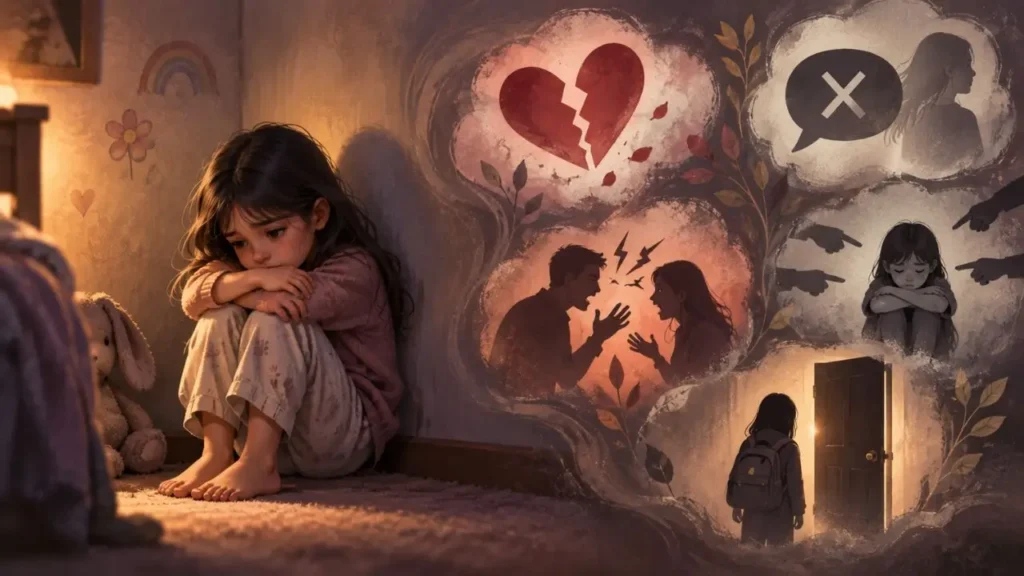
Childhood trauma isn’t just about one big, traumatic event. It also includes experiences that make a child feel constantly unsafe, unheard, or alone. Emotional neglect, constant criticism, a stressful home environment, or the sudden absence of a significant person can all fall under the category of childhood trauma.
The same situation affects different children in different ways. One child may be able to cope with a situation, while another may be deeply impacted by it. It depends on the individual’s age, temperament, the support system around them, and other factors. Childhood trauma is not a label; it is the name for experiences that can affect a child’s emotional development.
Read More: How to Stop Seeking Validation: Be Enough for Yourself
What experiences can be associated with childhood trauma?
Some common experiences that may be linked to childhood trauma include:
- when a child’s feelings are repeatedly ignored.
- when a child constantly feels “not good enough.”
- Excessive conflict or stress in the home.
- Bullying or rejection by peers.
- Abandonment or losing a loved one.
- Abuse or an environment lacking safety.
- Prolonged fear or insecurity.
These are general examples. Everyone’s experience is different, and you can’t directly conclude a specific problem from a single experience.
What Impact can Childhood Trauma have on Adult Life?
Unresolved childhood experiences can manifest as certain patterns in some people. This isn’t necessarily the case for everyone, and there can be many other causes. Still, many people feel a connection to these:
- Low self-worth — repeatedly feeling “not enough.”
- People-pleasing — suppressing your own needs to keep others happy.
- Fear of abandonment — becoming overly attached in relationships or fearing being left.
- Trust issues — difficulty trusting others.
- Relationship difficulties — feeling uncomfortable with intimacy or recurring conflicts.
- Struggle with boundaries — hesitation to say “no.”
- Overthinking and emotional triggers — old feelings resurfacing over small things.
- Excessive fear of conflict or perfectionism.
- Rejection sensitivity — feeling deep pain when rejected.
- Neglecting your own needs.
These patterns are not fixed outcomes. Everyone’s experience is different. Some people function well despite them, while for others they disrupt everyday life.
How to recognize that Childhood Experiences are still affecting you today?
Some signs to look out for:
- Overreacting to minor criticism.
- Repeating the same old problems in relationships.
- A habit of suppressing your emotions.
- Difficulty relaxing or asking for help.
- A sudden physical reaction to stress (like chest tightness or discomfort).
- Feeling like a “fraud” despite your successes.
These signs are just clues. You don’t need to self-diagnose based on them. If they’re affecting your daily life, it can be helpful to understand them and move forward thoughtfully.

How to Heal from Childhood Trauma?
Healing isn’t a straight path. It’s a gradual process of understanding yourself and creating new patterns. Here’s a practical framework:
1. Recognize your emotional patterns
Notice which situations you repeatedly respond to the same way. Is it people-pleasing? Is it avoiding conflict? Simply labeling it is the first step.
2. Understand your triggers
When a situation stirs up an old feeling inside you, pause and ask yourself: is this feeling happening now, or is it tied to an old memory? Learn to recognize your triggers instead of suppressing them.
3. Practice journaling
Write for a few minutes each day. “How did I feel today?” or “Where is this reaction coming from?” Writing without judgment is helpful.
4. Practice self-compassion
Talk to yourself with the same gentleness you would use with a small child. Instead of beating yourself up for mistakes, recognize that what you did at that moment was the best you could do at the time.
5. Inner Child Work
Talk to the part of yourself that still holds onto old emotions. This can be done through visualization or journaling.
6. Establish healthy boundaries
Start with small “noes.” Setting your limits is self-respect.
7. Express your emotions
Understand your emotions instead of suppressing them. Allow yourself to feel, crying, anger, or fear are all valid.
8. Develop safe relationships
Spend time with people who respect your feelings.
9. Challenge negative self-talk
Whenever you feel like you’re not good enough, take a moment to pause and ask yourself what makes you believe that and whether the thought truly reflects reality. Is there any evidence?”
10. Healthy routines and self-care
Sleep, light exercise, and regular rest also help the body feel safe.
11. Get professional help when needed
If daily life is being affected, talking to a qualified mental-health professional can be a safe step.

What is the role of Inner Child Healing?
Inner child means the part of you that still holds onto your childhood experiences. In inner child healing, people talk to that part, giving it the safety and understanding it never received. It can feel like re-parenting, giving yourself the care you never got before. This process is slow and personal. Many people do it through journaling, visualization, or therapy.
Can Childhood Trauma be Healed on Your Own?
Self-help is very valuable. Things like journaling, self-compassion, and boundaries help on a daily basis. But if the experiences are very intense, your daily functioning is being affected, or you feel unsafe, seeking professional support is wise. There are many approaches to therapy available. No single method is a universal cure for everyone. The right help depends on the individual and the situation.
Common Mistakes During Childhood Trauma Healing
- Blaming yourself—this isn’t healing, but an extra burden.
- Putting pressure on yourself to heal quickly—healing takes time.
- Linking every problem to childhood trauma—there can be many causes.
- Suppressing emotions—it may offer temporary relief, but it doesn’t help in the long run.
- Forcefully revisiting painful memories without preparation—this can sometimes make things even heavier.
- Completely shifting responsibility onto others by blaming them—understanding is important, but healing is also your own responsibility.
A Simple Childhood Trauma Healing Exercise
This exercise is gentle and safe. There is no need to forcefully recall any old memory. Take a piece of paper and a pen. Sit in a quiet place. Write:
“Let me pause and connect with the part of myself that feels overwhelmed or fragile today. What might I need right now, and how can I offer myself the comfort and support I need?”
Then, write down whatever comes without judgment. At the end, write, “I am listening to you. You are not alone.”
This can be a daily practice of a few minutes. If the emotion becomes too intense, stop and get help if needed.
Conclusion: Childhood Trauma Healing
Healing doesn’t mean erasing your past. It means understanding it well enough that it no longer runs your present. You don’t need to have everything figured out, just a willingness to listen to yourself with a little more kindness. Small steps matter. Setting one boundary, writing one honest journal entry, choosing one safe relationship. Healing is not a destination. It’s a quiet, courageous daily practice and you’re already on your way.
FAQ: Childhood Trauma Healing
What is Childhood Trauma?
Childhood trauma is not limited to just one major, traumatic event. Experiences like chronic emotional neglect, criticism, bullying, household stress, abuse, or feeling unsafe can also impact a child’s emotional development.
How can Childhood Trauma affect adult life?
Unresolved childhood experiences can manifest in some people as patterns such as low self-worth, people-pleasing, trust issues, fear of abandonment, overthinking, relationship difficulties, and trouble setting boundaries. However, its impact varies from person to person.
How to heal from childhood trauma?
Instead of completely “undoing” childhood trauma, it’s a more useful approach to understand the emotional patterns associated with it and gradually develop healthier ones. Journaling, self-compassion, healthy boundaries, safe relationships, and therapy when needed can help with this.
Can childhood trauma be healed on your own?
Some people may find help with practices like journaling, self-care, emotional awareness, and self-compassion. But if past experiences are seriously affecting daily life, relationships, or emotional well-being, it may be better to seek help from a qualified mental health professional.
What is Inner Child Healing and how can it help?
Inner Child Healing is a process in which a person seeks to understand emotional experiences from their childhood and to offer safety and compassion to that inner part of themselves. Journaling, visualization, and therapy can be some of the methods for this.
