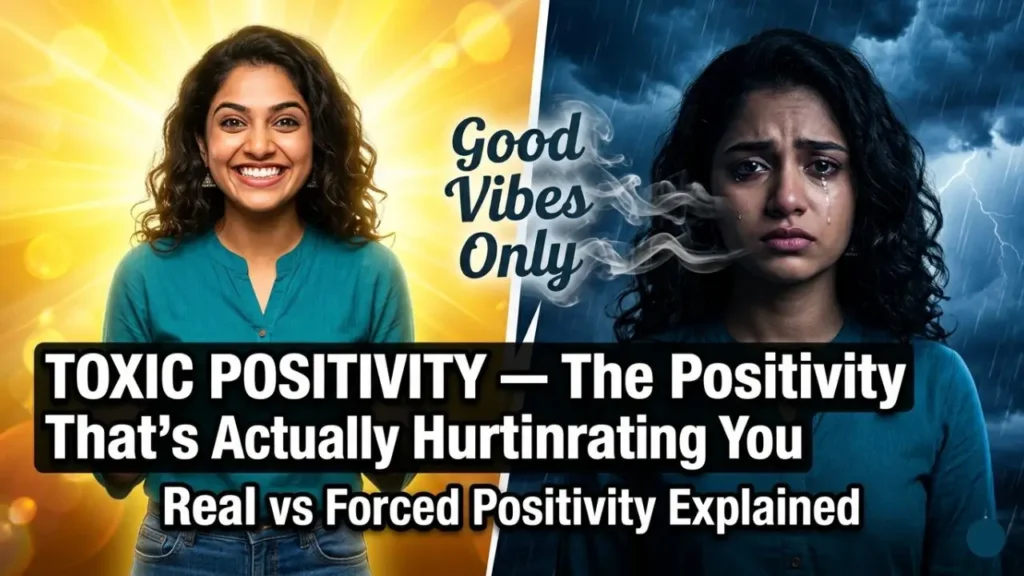
What is Toxic Positivity: Have you ever gone through something truly painful; a job loss, a breakup, a health scare. And someone immediately said, “Everything happens for a reason” or “Just focus on the good”? Instead of feeling supported, you felt dismissed. Maybe even guilty for being sad in the first place.
You’re not alone. In a world dominated by “Good Vibes Only” culture, hustle motivation, and picture-perfect Instagram lives, we’ve been quietly taught that negative emotions are a weakness. That feeling low means you’re not trying hard enough.
But here’s the truth; forcing yourself to stay positive all the time isn’t strength, it’s suppression. And suppression has a name: Toxic Positivity.
In this article, we’ll break down exactly what toxic positivity means, how it differs from real and forced positivity, how to spot it in your daily life, and most importantly how to replace it with something that actually heals.
Read More: Is Your Ego Silently Destroying Your Life? 8 Powerful Ways to Control It
What is Toxic Positivity?
Toxic Positivity is a psychological condition in which a person completely dismisses their own or others’ negative feelings and pressures them to remain positive at all costs.
In simple terms, toxic positivity means that no matter how many hardships life throws at you, you should always appear happy and positive. It involves suppressing feelings of sadness, anger, fear, or despair by labeling them as “weakness.”
Some examples of toxic positivity:
- When you lose your job, a friend says, “It’s okay, it’s God’s will, something better is coming.”
- When a relationship ends, family says, “Don’t cry, stay positive, you’ll find a good guy/girl.”
- When you’re diagnosed with an illness, people say, “Everything happens for a reason.”
These phrases sound nice, but they invalidate real pain. The easiest way to understand what toxic positivity is: when positivity becomes “pressure,” it turns toxic.

What is Real Positivity?
Real positivity is what accepts the truth of life. It says, “Yes, this is hard, but I can get through it.” In Real Positivity:
- All feelings are valid—sadness as well as happiness.
- Problems aren’t denied; they are understood and solved.
- It builds resilience, not a fake smile.
For example, if someone loses a job. A person with Real Positivity will say, “This is very painful. I’m sad, but it’s okay. Now I’ll learn new skills and move forward.” They feel the pain, but they don’t get stuck in it.
What is Forced Positivity?
Forced Positivity is the performative positivity that suppresses real emotions and pretends to always be happy. It’s a form of Toxic Positivity, but more active.
Here, the person repeatedly reminds themselves or others, “Think positive, don’t think negative.” But inside, everything is boiling over.
Example: Someone cries all night, but in the morning at the office they try to keep everyone happy by saying, “I’m totally fine, everything’s good.” Or a mother tells her child, “Don’t stress about your studies. Hey, just smile and study, don’t bring negativity.”
Forced positivity often shows up on social media, perfect photos, motivational quotes but there’s pain hidden behind it.
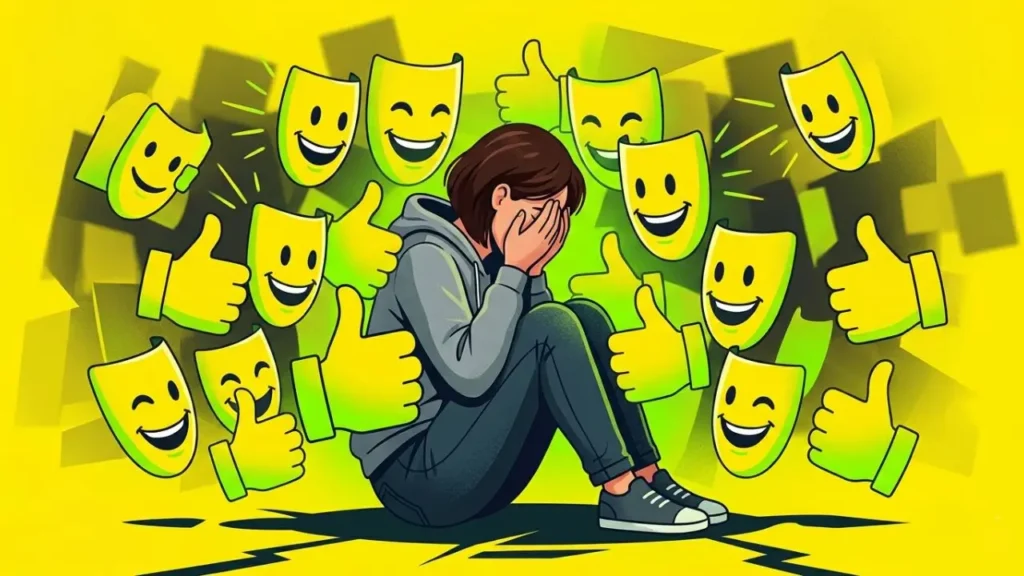
Toxic Positivity Examples
These phrases might sound kind and well-meaning. But in reality, they dismiss the other person’s pain entirely:
At work:
Your startup fails after two years of effort. A colleague says, “At least you learned something. Fail forward”. You needed acknowledgment, not a productivity quote.
In relationships:
You’re heartbroken after a long-term breakup. A friend says, “Don’t be sad, you deserve better anyway”, Your grief just got skipped over.
Health struggles:
You receive a difficult diagnosis. Someone responds, “Stay positive, mindset is everything” As if your emotions are causing the illness.
On social media:
A creator shares their anxiety. Comments flood in: “Be grateful, others have it worse.” Comparison isn’t comfort.
At home:
A teenager fails an exam and feels crushed. A parent says, “Stop overthinking, just smile and try again!” The stress was never addressed.
In every case, the words sound supportive but they invalidate real emotions. That’s exactly what makes toxic positivity so dangerous: it wears the mask of kindness.
How Does Toxic Positivity Affect Mental Health?
Toxic positivity doesn’t just prevent you from being negative; it also has several serious downsides:
- Emotional suppression: Suppressing negative emotions increases cortisol in the body, which leads to stress, high blood pressure, and sleep problems.
- Guilt: When you’re sad but repeatedly hear “stay positive,” you start to blame yourself, thinking, “Why am I so weak?”
- Cracks in Relationships: When someone invalidates your pain, you start to pull away from them. Friendships and family ties weaken.
- Problems Escalating: Denying real issues doesn’t solve them. Small problems grow into bigger ones.
- Burnout and Depression: Constantly pretending to be happy eventually leads to increased fatigue and sadness.
In a country like India, where mental health is still considered a taboo, Toxic Positivity makes it even worse.
How to recognize if you are trapped in Toxic Positivity?
There are some clear signs to recognize toxic positivity:
- When you express any negative emotion, people immediately tell you to “stay positive.”
- You tell yourself over and over, “I don’t have the right to be sad; my life is better than others’.”
- You only share happy posts on social media, hiding the truth of what’s really going on inside.
- When someone is sad, you unknowingly say, “It’s okay, things will get better.”
- You deceive yourself by saying “I’m fine,” even when you’ve been sad for a long time.
If you’re seeing these things in your life, then understand that it’s the effect of Toxic Positivity.

How to break free from toxic positivity?
The good news is that it’s possible to escape toxic positivity. Here are some simple and effective steps:
Validate your emotions: Tell yourself, “I’m feeling this sadness, and that’s okay.” Start journaling. Write for 10 minutes each day about how you’re feeling.
Find compassionate people: Choose friends or family who will listen, not give advice. If necessary, talk to a counselor.
Set boundaries: When someone says “stay positive,” politely say, “I just need to be heard right now, not given advice.”
Mindfulness and Meditation: Learn to observe your emotions without judgment. A 5-minute breathing exercise can be very helpful.
Set Realistic Goals: Instead of “I will always be happy,” say, “I will learn to manage my emotions.”
By adopting these tips, you can gradually find real balance.

Conclusion: What is Toxic Positivity?
After understanding what toxic positivity is, one thing is clear: the difference between real positivity and forced positivity is the difference between life and death. One makes you stronger; the other breaks you from the inside.
The real takeaway is that life brings sorrow, failure, and fear. Feeling them isn’t a weakness but part of being human. Only when you give all your emotions space will true happiness arrive.
Next time someone says, “Stay positive,” smile and say, “Yes, but first let me feel my pain.”
Your life is yours. Don’t let it be crushed under the burden of toxic positivity. Embrace real positivity, feel whole. That is the greatest strength.
FAQ: What is Toxic Positivity?
What does toxic positivity mean?
Toxic positivity means the pressure to be forced positive in every situation, no matter how difficult the circumstances. It involves ignoring emotions like sadness, anger, or fear and pretending that “everything is fine.” It’s a way of suppressing real emotions, which can be harmful in the long run.
How do I know if I have toxic positivity?
If you repeatedly suppress your negative emotions, stop yourself from being sad, or immediately say “it will all be okay” to every problem thinking and ignoring it, then this could be a sign of toxic positivity. Additionally, if you also dismiss others’ pain by telling them to “stay positive,” this is another significant sign.
Is toxic positivity a mental illness?
No, toxic positivity is not a mental illness in itself. It is a behavior or way of thinking that develops under the influence of society and social media. However, it can worsen mental health issues like stress, anxiety, and depression when it persists over a long period.
Is being too optimistic a bad thing?
No, being optimistic isn’t bad; in fact, when done correctly, it can be a great source of strength. The problem arises when optimism begins to deny reality. True positivity is about finding the strength to move forward while acknowledging hardships, whereas forced positivity suppresses genuine emotions.
How can you break free from Toxic Positivity?
The very first step to getting out of toxic positivity is to acknowledge your feelings. Give yourself permission to feel sadness, anger, or fear. It’s completely normal. Journaling, mindfulness, and talking openly with trusted people can be helpful. Also, when someone forces you to “stay positive” When someone insists, “Stay positive,” politely state your need to just be heard, not given advice. Over time, this practice will lead you to genuine, balanced positivity.
