
Body Image Issues: Have you ever stood in front of a mirror and wished something looked different: a slimmer waist, clearer skin, or a taller frame? If yes, you are not alone.
Millions of people silently fight this battle every single day. The truth is a “perfect body” does not exist. The real question is not how your body looks, but whether you treat it as a friend or an enemy.
Body image issues are one of the most common yet invisible problems affecting mental health today especially among young people in India, where social media pressure, family comments, and outdated beauty standards create a toxic mix.
In this article, we will explore where these issues come from, how they affect your mind, and most importantly how you can start accepting your body, one small step at a time.
Read More: 5 Signs Your Aura Is Damaged & 7 Ways How to Clean Your Aura
What are Body Image Issues?
Body image means how you see your body, how you feel about it, and what you think others think of you. It’s not just the reflection in the mirror, but the relationship between your mind and heart and your body.
People with a positive body image respect their bodies. They know their worth isn’t determined by their body’s shape or size. With a negative body image, a person constantly criticizes their body, finds fault, and feels inferior.
Body image is like a spectrum. Sometimes we respect our bodies, sometimes we move toward acceptance, sometimes we appreciate their capabilities, and sometimes we become completely free from societal standards.
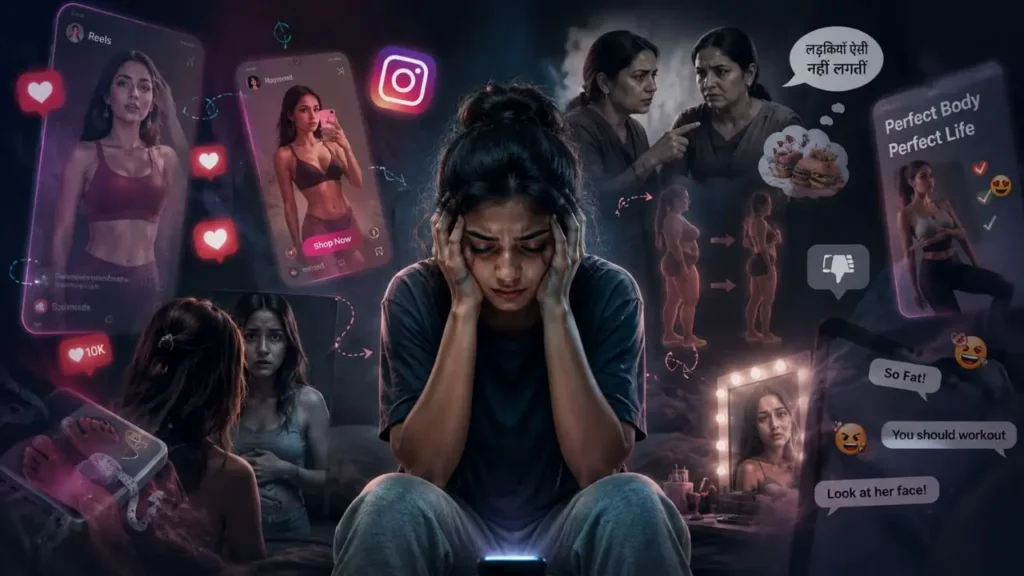
Why Do People Feel Insecure About Their Bodies?
Several factors combine to make us feel disconnected from our bodies:
- Social Media: Filters and edited photos on Instagram and Reels present unrealistic standards. We start comparing ourselves to those “perfect” pictures.
- Beauty Standards: Society has defined beauty as being thin, fair-skinned, tall, or muscular. Anything else starts to feel “less.”
- Family Criticism: Constant remarks about a child’s weight, skin, or appearance can leave lasting emotional scars and reduce self-confidence over time.
- Comparison Habit: Comparing yourself to friends, coworkers, or celebrities becomes a habit.
- Childhood Experiences and Bullying: School teasing or constant body comments at home leave a long-lasting impact.
- Low Self-esteem: When self-confidence is low, the body becomes the easiest target.
How does a negative body image affect your mental health?
When the mind constantly criticizes the body, mental health is affected:
- Anxiety and stress increase.
- Symptoms of depression may appear.
- Self-confidence drops.
- People start avoiding social interactions (social isolation).
- In some cases, the risk of eating disorders also increases.
Hating your body is essentially the same as hating yourself. It’s important to break this cycle.

How to Accept Your Body: A Step-by-Step Guide
Body acceptance does not happen overnight. It is built through small, consistent habits. Here are 10 practical steps to help you begin:
1. Stop Criticizing Your Body
Every time a thought like “my thighs are too big” enters your mind, pause it. Gently tell yourself, “I am learning to respect my body.” You do not have to love every part immediately. Just stop the attack.
2. Quit the Comparison Game
Unfollow social media accounts that make you feel less than enough. Replace them with pages that celebrate diverse, real bodies.
3. Try a Social Media Detox
Spend one or two days a week away from screens. Go for a walk, cook something, read a book. Step away from curated images to reset your perspective.
4. Practice Daily Gratitude for Your Body
Every morning, write down three things your body did for you: it breathed through the night, it let you hug someone, it carried you through a hard day. Gratitude shifts focus from appearance to function.
5. Use Positive Self-Talk
Replace harsh inner dialogue with kinder words. Try saying ‘ “My worth is not defined by my shape.” It may feel awkward at first. Do it anyway. Repetition rewires the mind.

6. Focus on Health, Not a Number
Exercise because it gives you energy, not because you want to shrink. Eat because your body needs nourishment, not to punish or reward yourself. Shift the goal from looking different to feeling better.
7. Celebrate Small Wins
Did you wear something comfortable today? Did you go out even when you felt self-conscious? That is a win. Acknowledge it. Progress is not always visible in a mirror.
8. Appreciate What Your Body Can Do
Your legs take you places. Your hands create things. Your lungs keep you alive. Shift your attention from how your body looks to everything it quietly does for you every single day.
9. Develop Self-Compassion
Talk to yourself the way you would talk to a close friend going through the same struggle. You would never call your best friend ugly or worthless ‘ so why say it to yourself?
10. Seek Professional Help When Needed
If body image issues are affecting your daily life, eating habits, or mental peace ‘ please reach out to a therapist or counselor. Cognitive Behavioral Therapy (CBT) is especially effective for reshaping negative thought patterns. Asking for help is strength, not weakness.
Body acceptance is not a destination. It is a daily practice of choosing kindness over criticism ‘ one thought at a time.
What Sets Body Positivity Apart from Body Neutrality?
Body Positivity says, “Every body is beautiful. Love it, no matter its size, shape, or ability.” This movement challenges society’s narrow standards.
Body Neutrality takes a slightly different path. It says, “You don’t have to feel in love with your body to care for it. Honour it, support it, and appreciate its abilities rather than its appearance.”
Both approaches are valuable. Adopt whichever one feels right for you.
Daily Habits to Increase Self-Love
- Wake up, look at yourself in the mirror, and say a positive sentence.
- Wear comfortable clothes that fit your current body well.
- Spend a little time with yourself every day, like while drinking tea or taking a walk.
- Before “liking” something on social media, think about how the post makes you feel.
- Thank your body when it works despite fatigue.
- Avoid negative body talk with friends.
- Before going to sleep at night, write down three things your body did well today.
What mistakes should be avoided?
- Weighing yourself every day and focusing only on the number.
- Thinking, “I’ll only be happy when I’m thin.”
- Criticizing other people’s bodies (this also affects your own).
- Finding happiness only in external changes.
- Suppressing your emotions.
- Limiting “self-love” to just photos and affirmations.

When is it necessary to seek professional help?
If body image issues are causing:
- Disrupted eating habits,
- Interference with daily life,
- Persistent sadness or anxiety,
- Thoughts of self-harm,
If these challenges are affecting your daily life, consider speaking with a psychologist or mental health professional. Reaching out for support is a positive step toward healing and personal growth.
Conclusion: Body Image Issues
Accepting your body is not a final destination, but a journey. Some days will be good, and other days your mind will slip back into old habits. This is normal. The important thing is to remain kind to yourself.
Your body is here to let you experience life—to breathe, laugh, cry, hug, and move forward. Take a small step today—maybe by smiling in the mirror or telling yourself, “I’m learning to accept myself.”
You are worth it. So is your body.
FAQ: Body Image Issues
What are the biggest problems with Body Image Issues?
In body image issues, a person feels constantly dissatisfied with their body’s shape, weight, color, height, face, or a specific part. This can lead to low self-confidence, a habit of constantly comparing oneself to others, and can also worsen problems like mental stress, anxiety, or depression.
How can a negative body image be improved?
To improve a negative body image, first reduce self-criticism and develop a sense of respect for your body. Avoid comparing yourself on social media, adopt a healthy lifestyle, practice positive self-talk, and focus on your body’s strengths rather than its perceived flaws. If the problem persists, seeking help from a mental health professional can be beneficial.
At what age can body image issues begin?
Body image issues often begin in the late childhood or teenage years (around ages 10–14). At this age, changes in the body, comments from friends, social media, and societal beauty standards have a greater impact. However, these issues can develop at any age.
What is the most effective therapy for body image issues?
Cognitive Behavioral Therapy (CBT) is considered one of the most effective methods for treating body image issues. It helps individuals identify their negative thoughts and replace them with healthier thinking. Depending on the need, Acceptance and Commitment Therapy (ACT) and Compassion-Focused Therapy (CFT) can also be beneficial.
Why do girls struggle more with body image issues?
Girls often feel more pressure about their bodies due to societal beauty standards, social media, the fashion industry, movies, and comments from family or friends. Being thin, fair skin, or “perfect” Expectations like being thin, fair-skinned, or having a “perfect” body can affect their self-confidence. However, this problem is not limited to girls; many boys today are also facing body image issues.

1 thought on “Body Image Issues: Learn to Accept Your Body & Love It”