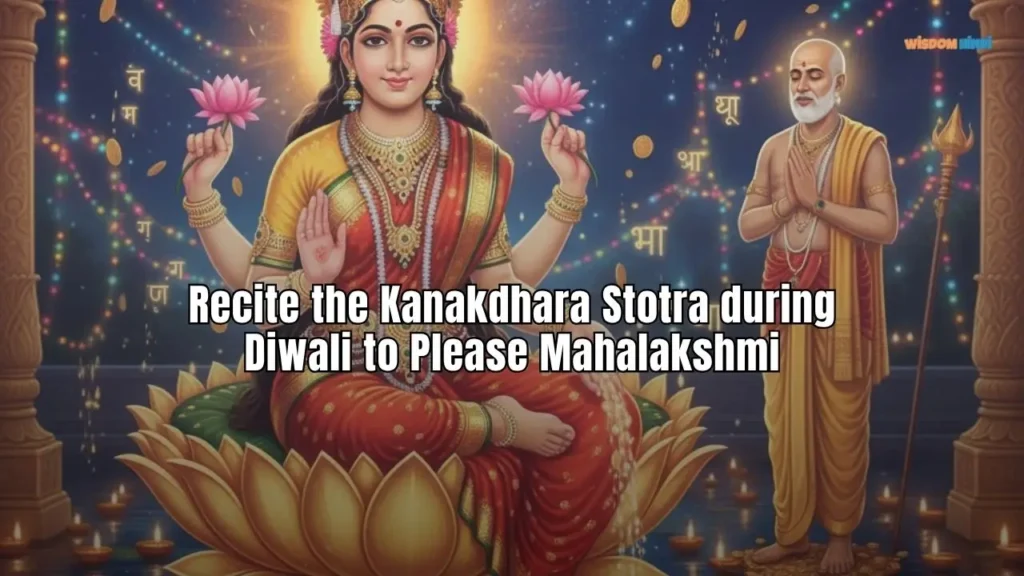
Kanakdhara Stotra Path on Diwali: Diwali is not just a festival, but also a divine opportunity to dispel darkness from the soul and fill it with light. It is a festival when millions of lamps illuminate not only homes but also hearts. Diwali begins with Dhan Trayodashi and continues until Bhai Dooj. This special five-day period is considered an opportune time to worship Goddess Lakshmi. It is said that proper spiritual practice during these five days not only increases wealth but also brings prosperity, good fortune, and peace.
If a person recites the Kanakdhara Stotra during these five days, they not only receive the blessings of Goddess Lakshmi but also receive the divine blessings of all the gods and goddesses. Indeed, in the Indian spiritual tradition, there are numerous hymns and mantras that offer spiritual experiences to seekers. One such hymn is the Kanakadhara Stotra, considered an effective source for worshipping the Goddess Lakshmi. It was composed by Jagatguru Adi Shankaracharya, the founder of Advaita Vedanta, at the age of only 8.
Read More: Read These verses of Hanuman Chalisa to Get Relief from All Suffering
By reciting this stotra, not only is Goddess Lakshmi pleased, but all kinds of darkness in life also get removed. The person moves towards spirituality, the darkness of sorrow is removed and the golden stream of prosperity flows. In today’s article, we are going to tell you the origin of Kanakdhara Stotra, its importance, its chanting for 5 days of Diwali, and the correct pronunciation of Kanakdhara Stotra so that you too can attain happiness, prosperity, and blessings in life by reciting this stotra.
The Story of the Origin of the Kanakadhara Stotra
Adi Shankaracharya Maharaja had taken sanyasa at the age of eight. He was then following the rigorous spiritual practices of a renunciant, and during this time, he observed the tradition of begging from village to village. One day, while begging, Adi Shankaracharya arrived at a small village. The village was very simple, and all the people were extremely poor.
Adi Shankaracharya stopped near a house made of mud. He called out for alms at the door, “Please give me alms, Mother!” Hearing his voice, a woman living in the house came out. The woman was a Brahmin woman who appeared emotional and full of suffering. The walls of the house were also very dilapidated. It appeared that the stove had not been lit in the house for many days, and no one in the family had eaten a meal.
But when the mother saw the monk’s son standing at her door, she decided not to send him away empty-handed. Although she had nothing to give, she thought she could offer something from whatever she had. So she went inside the house and searched. Finding nothing, she became very disappointed. Finally, after a long search, she found a dried Indian gooseberry (amla) kept in a corner. However, the amla was so dry that it was no longer edible.
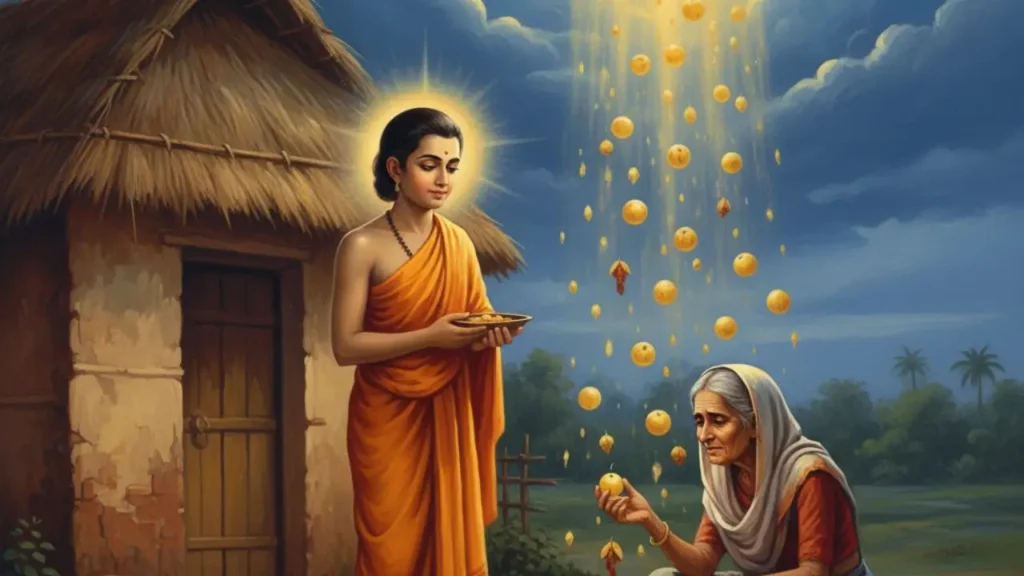
But the mother thought that it would be better to give something to the monk with a calm heart than to return empty-handed. The mother immediately offered the dried Indian gooseberry to Shankaracharya. When the young Shankaracharya took the amla in his hands, he felt a deep compassion. He thought that this mother, herself hungry, was eager to give as much as possible. With this sentiment in mind, spiritual power awakened within him, and he began composing a hymn to praise Shri Lakshmi.
Through this composition, he invoked Goddess Lakshmi in such a way that she became so pleased that a wonderful energy spread throughout the atmosphere. A golden aura appeared from the sky and a stream of golden gooseberries began flowing into the woman’s house. Golden gooseberries began falling into the small hut. The entire house shone. The woman, who had been troubled by hunger and poverty until some time ago, now had no shortage of wealth and grains in her life.
This source, composed by Adi Shankaracharya, was called the Kanakdhara source. Kanak means gold, stream means rain, meaning such a source that by merely reciting it, a person’s life begins to be showered with gold.
Kanakdhara Strotam
angam hareh pulakbhushanamaashrayanti
brihmendragangaramaniyamahah prapanna .
lokaasrayah sutatanum pavanen jatam
dhanyam namaami dishatam mam daivatam tam . 1 .
indradidevganavanditasevyamana
Saubhagyadayini Sabhajitapadmanetre.
vishnupriya mam dadatu dhanam shubham tav
Padmakaraprasut Shubhe Namaste. 2.
digghastibhih kanakakumbhamukhavasrisht
svarvahinivimalacharuvilasini tvam .
Sarveshvari mam dhanam dish me karastham
Saubhagyadayini Ganeshajane Namaste. 3.
kubjaambikakuchakunkumasannivisht
Kasturikamrugamadasaviliptagatram.
Vishveshvarim jagadadharinim tvamidyam
lakshmim namaami mam dhanyatamupeyam . 4.
praalambamauktikasutamanichandralekha-
vistaritam kritsubhasitamandahasam .
padambujam sumanasam natavibhramanam
padmapriye mam dhanam kuru me prasadat . 5 .
adyani te charanayugmamanitavruttam
Drushtva maya pranatasarvajaganmanodhnye.
mangalyadayini manoharini tvamidye
lakshmim namaami satatam mam sannidhattam. 6.
manjiramanjulatarangabhujanganag-
rajatsupadayugalam nakhadiptipunjam .
vipranamadbhutatamam vitaranti bhadram
lakshmim namaami mam sannidhattam . 7 .
Shrimannitambabhuvanam smarasharvanetra-
Nirmandipashikhaya ch suvasitangeem.
abhyarchya bhaktivashagaam namato̕hamadyam
lakshmim namaami satatam mam sannidhattam. 8.
Kamalanayike Kamalamalini Vishvamatah
Saurabhyavati Kamalani Manoharani.
Padaravindayugalam paripatya sevaam
lakshmim namaami satatam mam sannidhattam. 9.
Sviyekshane jagadidam bhavatim prasid
sarvanyathasitamasaukhyabhayati dhutam.
Shrikantike tvamsi sarvajaganmahishtha
lakshmim namaami satatam mam sannidhattam. 10.
dhanyam lasanmakarakundalamandahasam
padmapriyam manigruheshu manodhnyavarnam .
shrivishnuvaambhujanivasitam namaami
lakshmim namaami satatam mam sannidhattam . 11 .
bhogyam ch nityasukhadam kalyanahetum
vibhrajmanavapusham karunardradrushtim.
Shrimanmaheshamanisham natavatsalam tam
lakshmim namaami satatam mam sannidhattam. 12.
siddheshvarim sakalasiddhinibandhanim tam
Shrim bhaktalokavashagaam smaramandarangeem.
vibhrajmanamakaraalayamadhyastham tam
lakshmim namaami satatam mam sannidhattam . 13.
devim prasannamukhankajamanjulam tam
padmapriyamanudinam paripatya seve.
praptya sada mam gruham pravishetsupita
lakshmim namaami satatam mam sannidhattam. 14.
Chandranshubimbvadanam Chandralekhaadhareyam
bhalasthitam nayanayugmavibhushitangeem.
Chandraaravindavadanamanisham smarami
lakshmim namaami satatam mam sannidhattam. 15.
devim sureshvariganeshvaramaulivandyam
bhaktipriyam sakalalokahitaishinim tam.
Samrajyadayini sadabhavatu prasanna
lakshmim namaami satatam mam sannidhattam. 16.
lakshmim kshamaam karunaya sah sanyujyantim
narayanen sah sada bhavatim prasid.
Shrimanmaheshagurusevitapadapadmaam
lakshmim namaami satatam mam sannidhattam. 17.
kantya̕tivishadam lasantamaulim
Manikyaharavilasanmanimuktabhushaa.
Shrimanmaheshamanimanditakaustubhadhyam
lakshmim namaami satatam mam sannidhattam. 18.
mata maraalvilasatkarapallavadhyam
Manjiramanjulamanoharaharabhushaam.
Shrimanmaheshavilasatpadapadmabhaktam
lakshmim namaami satatam mam sannidhattam. 19.
saundaryalavanyavibhushanaadhyam
narayanapriyasakhim jantapavitram.
Shrikantamandanavibhushanavibhramaadhyam
lakshmim namaami satatam mam sannidhattam. 20.
adyam ch vishvajananim jagatam varenyam
shrirangarajamahishim karunardradrushtim.
Shrimanmaheshapadapadmanishevitangeem
lakshmim namaami satatam mam sannidhattam. 21.
Why recite the Kanakdhara Stotra on the five days of Diwali?
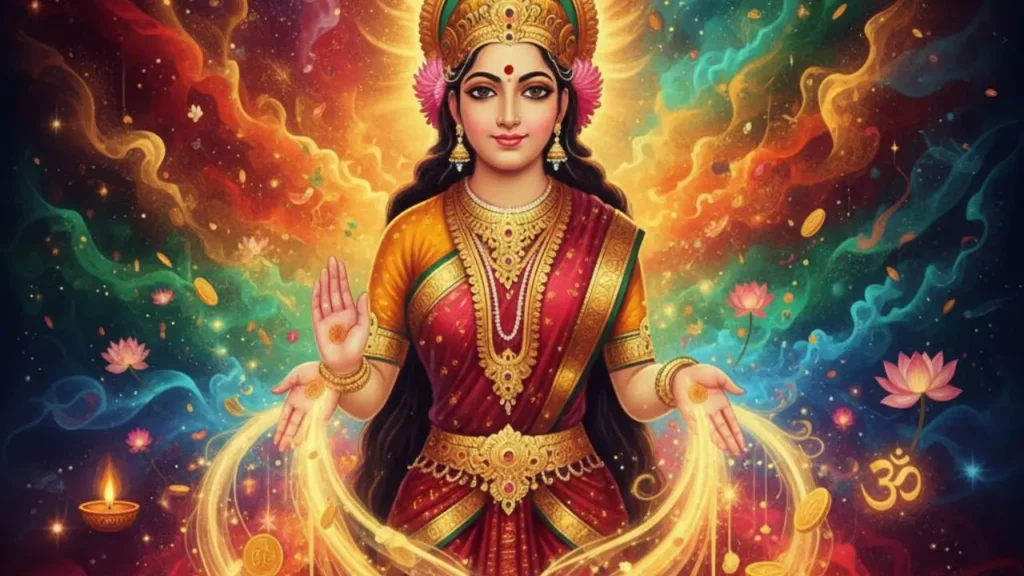
The Kanakdhara Stotra contains 21 verses praising the 21 forms of Goddess Lakshmi. Reciting it brings not only wealth but also prosperity in every aspect of life. Reciting the Kanakdhara Stotra for five days during Diwali not only dispels external darkness but also dispels internal darkness.
Rules for reciting the Kanakdhara Stotra on the five days of Diwali
Dhanteras: Reciting the Kanakdhara Stotra along with worshipping Goddess Lakshmi and Dhanvantari, the goddess of wealth, brings prosperity to the home.
Narak Chaturdashi: This day is dedicated to removing negativity. Therefore, reciting the Kanakdhara Stotra on this day dispels poverty and eliminates obstacles in life.
Diwali: Reciting the Kanakdhara Stotra during the Lakshmi Ganesh Puja on the new moon day pleases Goddess Lakshmi and showers her blessings.
Govardhan Puja: By reciting the Kanakdhara Stotra during the Prakriti and Annakut festivals, there is no dearth of wealth and prosperity in a person’s life.
Bhai Dooj; Yama Dwitiya: If the Kanakdhara Stotra is recited on the auspicious occasion of Yama Dwitiya, the unique love between brother and sister, happiness, prosperity and wealth remain intact in the family.
Benefits of Reciting the Kanakadhara Stotra
- Reciting the Kanakadhara Stotra increases the flow of cosmic energy around the practitioner.
- The chanting of the mantras creates a special sound that pleases Goddess Lakshmi.
- Reciting the Kanakadhara Stotra creates a special shield around the individual, making it easier for them to achieve whatever they desire.
- Reciting this stotra helps alleviate financial difficulties. The sound of the mantra brings mental peace and increases self-confidence.
- The Kanakadhara Stotra is considered beneficial not only for wealth but also for attaining the eight forms of Goddess Lakshmi, which not only bestow wealth but also provide children, prosperity, and spiritual power.
- Reciting this stotra fosters love, cooperation, and harmony within the family.
How to Recite the Kanakadhara Stotra
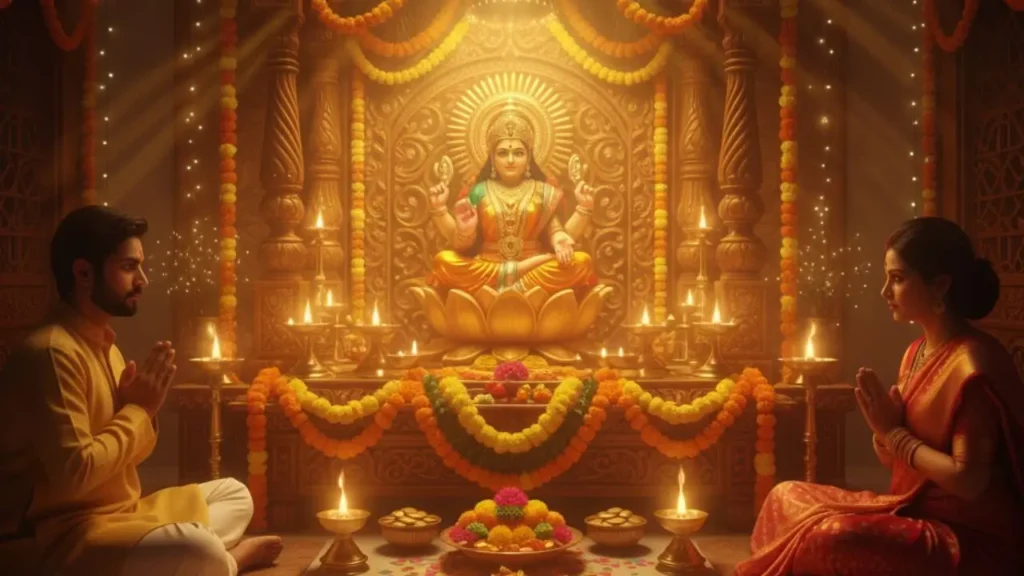
Reciting the Kanakadhara Stotra requires following a specific ritual. First, bathe and wear clean clothes. Then, sit facing east or north, placing an idol of Goddess Lakshmi in front of you. Light a ghee lamp in front of it. Then, offer flowers and incense to the idol. Then, recite the 21 verses with devotion. If you cannot read Sanskrit, you can read the Hindi meaning or listen to the audio. After completing the stotra, offer food to the Goddess and donate as much as possible to the needy.
Overall, reciting the Kanakadhara Stotra for five days during Diwali not only dispels external darkness but also empowers you to overcome internal darkness. This Diwali, along with lighting lamps, be sure to recite the Kanakadhara Stotra so that you, like that old lady, can benefit from the golden shower.
FAQ- Kanakdhara Strot Path on Diwali
What are the benefits of the Kanakdhara Strot?
Reciting the Kanakdhara Strot creates a special shield around a person, making it easier for them to achieve whatever they desire.

2 thoughts on “Please Goddess Lakshmi by Reciting the Kanakdhara Stotra during the 5 Days of Diwali”